
Adani Ports targets 1 billion tonnes cargo by 2030 after crossing 500 MMT
ADVERTISEMENT
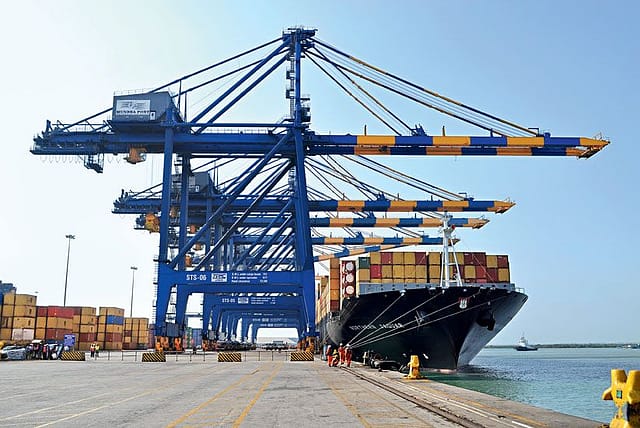
Adani Ports and Special Economic Zone (APSEZ) will target handling 1 billion tonnes of cargo annually by 2030, chairman Gautam Adani said on Friday, as the company crossed the 500 million tonnes milestone.
The milestone marks a major step in the company’s growth trajectory, with Adani highlighting that the pace of expansion has accelerated sharply over time. It took APSEZ 16 years to reach its first 100 million tonnes of cargo, followed by five years for the next 100 million tonnes, three years for the third, and just two years each for the fourth and fifth 100 million tonnes.
Focus on scale and execution
Adani said the company’s growth has been driven by a focus on execution and the development of an integrated logistics network rather than a collection of standalone assets.
“What we built is not a collection of assets. It is a living network,” he said, describing the ports business as a system that enables the flow of cargo, connectivity and industry.
He added that logistics capacity will emerge as a key strategic lever for India’s growth in the coming years, positioning APSEZ as a central player in the country’s infrastructure ecosystem.
Organisational shift underway
The group is also restructuring its operating model to support future growth, moving towards a three-layer structure aimed at flattening hierarchy and pushing decision-making closer to the frontline.
Adani said the change is not aimed at cost reduction but at improving speed and responsiveness by empowering teams closer to operations.
“The organizations that will win in the future will not be the ones with the tallest hierarchies, but the ones with the fastest reflexes,” he said.
Highlighting the role of on-ground teams, Adani said the “real magic” of infrastructure operations lies at the last mile, including crane operators, logistics teams and maintenance staff.
He also stressed the need to build stronger partnerships across the ecosystem, saying financially healthy partners contribute to better execution and long-term resilience.
Global footprint and next phase
APSEZ operates a network of ports across India and internationally, including assets in Australia, Israel, Sri Lanka and Tanzania.
Adani said the next phase of growth will be driven by scale, speed and execution, with the company aiming to double cargo volumes over the next five years.