
After YouTube pay-per-view bet, Sitaare Zameen Par heads to SonyLIV in delayed OTT Play
ADVERTISEMENT
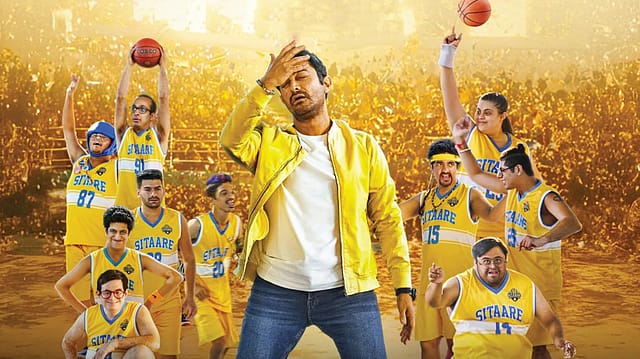
In a full-circle moment for its unconventional distribution journey, Sitaare Zameen Par—Aamir Khan’s 2025 theatrical hit—will finally make its OTT debut on SonyLIV on April 3, nearly 10 months after its cinema release. The move underscores a calibrated, multi-window strategy that departs from the industry’s standard quick-turnaround OTT deals.
Why did Aamir Khan delay the OTT release?
Instead of opting for an immediate streaming sale post its June 2025 theatrical release—where the film grossed over ₹250 crore globally—Khan chose to first monetise the title through a direct-to-consumer route. In August 2025, Sitaare Zameen Par was released on his YouTube channel, Aamir Khan Talkies, on a pay-per-view (TVOD) model priced at ₹100 per view.
At the time, the actor positioned the move as an experiment in digital distribution and audience ownership, attempting to build a more direct economic relationship with viewers while protecting theatrical revenues.
In an earlier conversation with Fortune India, Khan reiterated that this approach is part of a larger, long-term strategy. He said he intends to make all his films available on YouTube via a pay-per-view model, prioritising direct audience monetisation over large upfront OTT licensing deals.
“I don’t want ₹100–125 crore from platforms. I want ₹100 from my audience,” he had said earlier, signalling a shift towards decentralised film monetisation and an alternative to platform-driven economics.
This approach is also being reinforced by YouTube’s growing role in film distribution and audience engagement.
Gunjan Soni, Managing Director - India, YouTube, says the platform is emerging as a key partner for the media and entertainment industry, helping build pre-release demand and long-term audience engagement beyond just trailers through community-driven content.
She adds that initiatives such as the direct-to-digital release of Sitaare Zameen Par and the use of fan-funding tools like Channel Memberships are opening up new monetisation pathways for creators, while the rise of connected TV viewing in India is driving demand for longer-form, premium storytelling.
What does this mean for OTT distribution models?
The film’s eventual arrival on SonyLIV highlights an emerging hybrid distribution playbook—one that layers theatrical release, transactional digital viewing, and delayed OTT licensing to maximise both revenue streams and audience reach over time.
For SonyLIV, the acquisition aligns with its focused and differentiated content strategy. A company spokesperson told Fortune India in an earlier interaction that the platform prioritises “interesting and cerebral” content for paying audiences, rather than relying on star-led, high-budget programming.
The platform’s approach is anchored in well-researched, authentic Indian stories, backed by strong unit economics and a tightly curated content slate. Unlike global streaming platforms that commission upwards of 80–100 shows annually, SonyLIV keeps its output selective, enabling it to take creative risks without significantly escalating costs.
“We focus on content that excites and engages a paying audience… authenticity and storytelling are core to our proposition,” he said.
A SonyLIV spokesperson added that the platform prioritises content that is culturally relevant and resonant, noting that Sitaare Zameen Par “blends cinematic depth with strong theatrical recall” and marks a strategic step in strengthening its content library, with expectations of strong audience engagement.
How is SonyLIV positioning its content strategy?
SonyLIV also leans on predictable programming—particularly Hindi originals and Malayalam films—to drive subscriber retention, rather than investing heavily in large-scale, high-churn acquisition strategies.
The addition of Sitaare Zameen Par, a film with strong theatrical recall and a socially resonant narrative, fits into the platform’s broader push to strengthen its premium library through post-theatrical acquisitions that offer both depth and engagement.
For the wider industry, the film’s staggered release strategy presents a potential blueprint. By sequencing theatrical runs, direct pay-per-view access, and OTT licensing, content creators can balance theatrical protection with digital experimentation and long-tail monetisation.
As streaming platforms recalibrate content spending and filmmakers explore new distribution models, Khan’s approach tests whether audience-funded access can coexist with platform-driven scale—while platforms like SonyLIV continue to bet on curated, cost-disciplined storytelling to drive the next phase of OTT growth.