
Elon Musk says partner Shivon Zilis is 'half Indian', has named one child after Nobel Laureate Subrahmanyan Chandrasekhar
ADVERTISEMENT
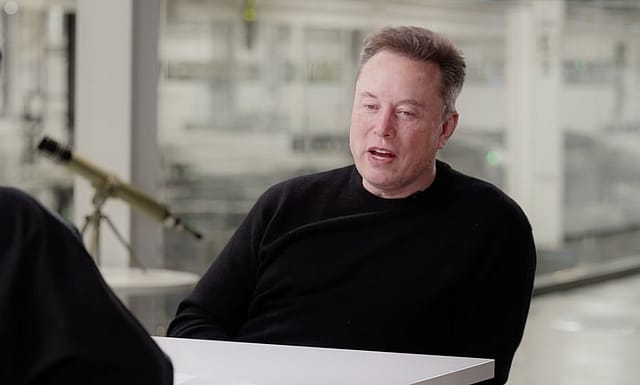
Tesla and SpaceX CEO Elon Musk, during his latest podcast with Zerodha Co-founder Nikhil Kamath, said his partner Shivon Zilis, who works at one of his companies Neuralink, has an Indian heritage, and that one of their sons carries the middle name "Sekhar", which came from Nobel Prize-winning Indian-American astrophysicist Subrahmanyan Chandrasekhar.
Speaking about his Indian connection and view on children, Musk said he shares a personal connection to India through his partner: “My partner Siobhan, she’s half Indian.” He adds a detail about their family, “One of my sons with her… his middle name is Sekar after Chandra Sekar.” Regarding Siobhan’s ancestry, Musk explains, “She was given up for adoption. She grew up in Canada.”
When asked about his growing family, Musk jokes with characteristic humor, “I’m like an army. I'm trying to get an entire Roman Legion. On the topic of adoption, Musk is open but realistic, emphasising his priorities: “I definitely have my hands full right now. I’m not opposed to it, but I do want to be able to spend some time with my kids, beyond a certain number, it’s kind of impossible.”
On being asked about the one child, one mother, one father concept, he said it does work for most people. “That’s generally what works for most.” On being asked if he would adopt kids, Musk said: “I definitely have my hands full. I want to be able to spend time with my kids. Beyond a certain number it’s impossible to do that.”
He said his older kids are very independent—they’re in university. “Especially sons: after a certain age they’re very independent. Most boys don’t spend a lot of time with their parents after 18. I see them once in a while, but they’re independent...so you can only have enough young kids where you can actually spend time with them,” he said.
About his views on the future of marriage and family, Musk said he worries about population decline. “It’s a big problem. I don’t want humanity to disappear. A decline and disappearing are different things. If the trend continues, we disappear. Also, going back to my philosophy—we want to expand consciousness. Fewer humans means less consciousness.”
On being asked if consciousness goes up simply with more people, he said: “Yes. Just as consciousness increases from a single-cell creature to a 30-trillion-cell creature, we’re more conscious than bacteria. A larger human population means more consciousness overall. We’re more likely to understand the universe’s nature with more people than with fewer.”
He said the kid is half you genetically, and growing up around you adds environmental learning. “So, yes, children end up being part you from a hardware standpoint, and part you from a software standpoint.”
He said he does not intend to make cold analogies, but kids will be close to individuals in both ways. “Do I pick a side in the nature vs nurture debate? I think of it as hardware and software—it’s a false dichotomy. A human has bone structure, muscle structure, and if you think of the brain as a biological computer, it has circuitry—number of circuits, efficiency, dexterity, reaction and speed. The potential within that hardware is shaped by the software.”