
GAIL warns of gas supply cuts as 30% of imports blocked amid West Asia turmoil
ADVERTISEMENT
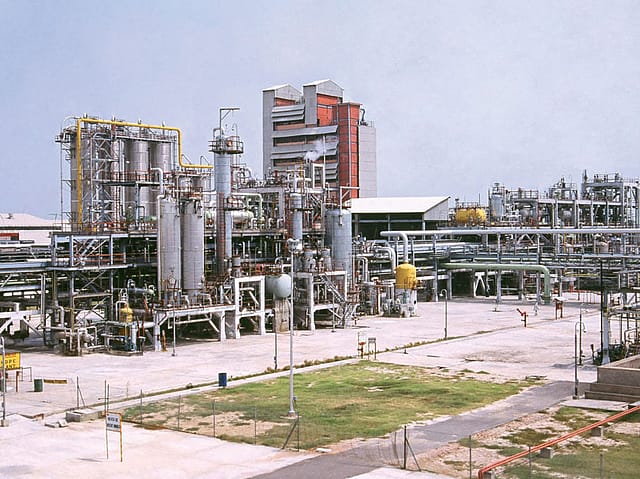
State-run GAIL (India) Ltd is planning slash natural gas supplies to select customers after roughly 30 per cent of India's imported LNG shipments were blocked due to escalating military conflict in West Asia.
Following joint US and Israeli strikes on Iranian government, military and nuclear facilities, Iran’s Islamic Revolutionary Guard Corps warned vessels against transiting the Strait of Hormuz - the narrow sea lane through which crude oil and natural gas from Gulf producers move to global markets - prompting major insurers to withdraw or sharply raise war-risk coverage and forcing several shipping lines to suspend tanker movements through the route.
For India, a bulk of its liquefied natural gas (LNG) supplies from Qatar and the UAE flows through the Strait.
In a stock exchange filing, GAIL said its LNG supplier has served a force majeure notice "due to constraints faced by certain LNG vessels arising from maritime navigation restrictions related to the Strait of Hormuz during transit between India and Qatar."
Force majeure - the legal clause in the contract that refers to extraordinary events beyond the control of parties - was possibly due to the reported shutdown of LNG facilities in Qatar.
"Consequently, due to supply restrictions imposed, the allocation of LNG quantities to GAIL under the said contract has been reduced to zero with effect from March 4, 2026," GAIL said. "GAIL is currently assessing the situation with respect to any supply curtailment that may need to be imposed on its downstream customers."
A top oil ministry official said as much as 60 million standard cubic meters per day of gas supplies has been halted due to the blockage of the Strait of Hormuz.
India consumes 195 mmscmd of gas for generating electricity, producing fertiliser, turning into CNG to run automobiles, fire household kitchens and serve as feedstock for various industries.
The situation may warrant re-prioritising gas supplies by imposing cuts on some users, he said without elaborating.
Supplies from alternate sources are being arranged to fill the gap, he said, adding the critical sectors, such as fertiliser, will be given priority in supplies to help meet peak sowing season needs.
LNG shipments through the Strait of Hormuz - a critical global energy chokepoint - have reportedly been suspended since February 28, temporarily stranding nearly 20 per cent of global LNG supply and raising concerns across Asian import markets.
India is among the most exposed buyers in the region. Data from Kpler shows that more than half of India's LNG imports pass through the strait from suppliers such as Qatar and the UAE, leaving the country vulnerable to both physical supply disruptions and price shocks.
The risk is compounded by India's LNG pricing structure. A large portion of its long-term LNG contracts are linked to crude oil prices, while additional volumes are typically sourced from the spot market, where prices tend to spike during supply disruptions.
Market participants say the current situation has already begun tightening regional LNG balances and increasing the cost of replacement cargoes. If the disruption persists, Indian buyers may have to procure higher-priced spot cargoes or cut consumption.
Price-sensitive consumers, particularly industrial users and smaller gas distributors, could shift to alternate fuels such as fuel oil, naphtha or petroleum coke to manage rising costs.
Replacement LNG supplies could potentially come from the United States, West Africa, Australia or Russia, but longer shipping distances would raise freight costs and extend delivery times.
In the near term, India is expected to prioritise gas supply for critical sectors, especially fertiliser plants ahead of the upcoming sowing season, as well as cooking gas distribution and power generation, industry sources said.