
Haleon sees India as future top-four market, commits ₹2,000 crore to local manufacturing
ADVERTISEMENT
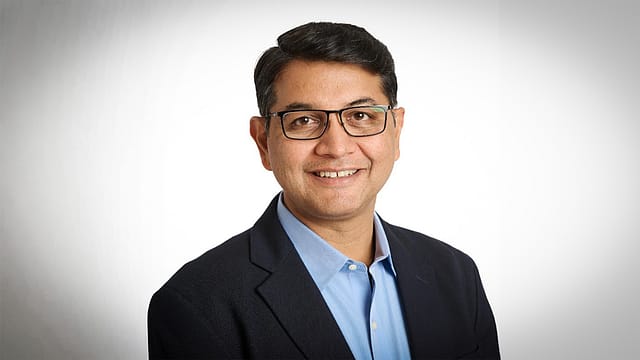
Haleon, the maker of Sensodyne, Centrum and Eno, is making its biggest investment in India so far, committing ₹2,000 crore to build its first wholly owned manufacturing facility in the country as it positions India to become one of its top global markets in the coming years.
The consumer healthcare company will set up an oral health manufacturing plant at Pitampur near Indore in Madhya Pradesh, marking its first owned production facility in India after years of relying on a network of contract manufacturers. The plant, spread across 40 acres, is expected to become operational over the next two-and-a-half to three years.
For Haleon, the investment is as much about future demand as it is about manufacturing.
"This will be our largest investment in India to date, a key market where we see significant potential for the future," said Brian McNamara, chief executive officer of Haleon. "It reflects our confidence in India, the opportunity ahead and the role that we can play in everyday health for 1.4 billion Indians."
India is already among Haleon's fastest-growing markets and is central to the company's ambition of reaching one billion additional consumers globally by 2030. Of that target, India alone is expected to contribute 300 million consumers.
McNamara said India offers a compelling long-term growth opportunity driven by demographic and economic trends. The country's population is expected to expand by another 100 million people by 2036, while the consumer healthcare market is projected to exceed $23 billion by 2030.
At the same time, preventive healthcare is gaining traction. According to Haleon, 53% of consumers actively manage their health, affluent households are expected to cross 75 million by 2030, and online channels already account for 23% of consumer healthcare sales.
For the company, oral care represents the biggest opportunity.
Haleon estimates India's oral health market at £1.8 billion and says it commands a 71% share of the therapeutic oral health segment through brands such as Sensodyne. Yet the category remains significantly underpenetrated. "Fundamentally, this investment is about making trusted oral health products more accessible to more people," McNamara said.
Building for scale and access
The company believes a large unmet need still exists, particularly outside urban centres. One dentist serves as many as 250,000 people in some parts of rural India, while only one in seven rural residents visits a dentist annually.
To address that gap, Haleon has been pushing smaller and more affordable product packs. Sensodyne is now available in a ₹20 pack, a move that Kedar Lele, CEO India and President, India Subcontinent, described as transformational for the business.
"Twenty percent of our toothpaste volumes now come from the ₹20 pack. Close to half of our growth is coming from this," Lele said.
The company has expanded distribution to more than 600,000 outlets across 10,000 villages and added 500 employees over the last year to strengthen its reach among lower-income consumers. Lele said the new factory will support that strategy while giving Haleon greater control over manufacturing and enabling more complex product formulations.
"If you look at an average oral care site that gets put up, nobody puts ₹2,000 crore of investment," he said. "What we are doing is bringing in state-of-the-art AI-enabled manufacturing. We expect this facility to become part of Haleon's global manufacturing network."
The company currently operates 24 manufacturing facilities globally. India will become its first owned oral care manufacturing site serving the country's 1.4 billion consumers.
The facility is also expected to create up to 500 jobs, with at least 30% earmarked for women.
Beyond manufacturing, Haleon plans to continue investing in sales expansion, consumer education, research and development, and potentially acquisitions. McNamara said India currently ranks within Haleon's top 10 markets globally but is expected to move significantly higher. "We want India to become one of our top three or four markets globally over the next number of years because we just see a tremendous number of opportunities."
Even amid geopolitical uncertainty and global economic volatility, Haleon sees India as one of the brightest spots in its portfolio.
"From a medium and long-term perspective, there is no doubt in my mind that India is the place you want to invest," McNamara said.