
India can double exports to BRICS to $200 billion by 2030: ASSOCHAM
ADVERTISEMENT
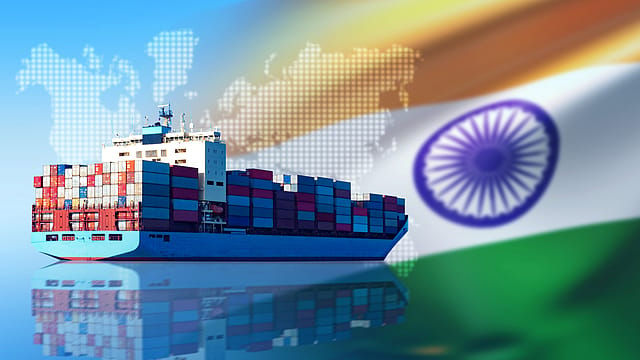
As India sharpens its focus on strengthening bilateral trade ties with high-potential economies, a significant opportunity is emerging to expand exports to BRICS nations, according to a study by the ASSOCHAM Global Strategy and Research Centre.
The report highlights that growing economic cooperation among BRICS member countries, coupled with India’s rising manufacturing competitiveness and evolving demand-supply dynamics across the bloc, could accelerate the country’s export growth trajectory under the expanded BRICS Plus framework.
“In the current global economic landscape, the trajectory of multilateral institutions is undergoing a pivotal shift, and BRICS is emerging as an important and dynamic participant in this transformation,” said Saurabh Sanyal of ASSOCHAM.
The study underlined that deeper economic engagement across BRICS in areas such as macroeconomic and financial cooperation, trade and investment, digital economy, green development, industrial collaboration, supply chain integration, and customs coordination could position the grouping as a key building block of future global strategic economic architecture.
India, a founding member of BRICS, has maintained a balanced approach in strengthening trade, investment, and diplomatic ties within the bloc over the years, Sanyal said. He added that India’s active participation and sustained engagement have enhanced economic dialogue and broadened avenues for cooperation.
India can play a larger role in shaping the bloc’s economic agenda
The report noted that India remains among the fastest-growing major economies globally, recording average annual growth of over 7% during FY21–FY26. Growth projections for the current fiscal year remain in the range of 6.5% to 7%, reinforcing India’s position to play a larger role in shaping the bloc’s economic agenda amid evolving geopolitical and trade realities.
India’s exports to BRICS countries reached $96 billion in FY26. ASSOCHAM estimates that with targeted policy support and stronger South-South cooperation, exports to the bloc could more than double to $200 billion by 2030. Such expansion could also lift India’s share in BRICS countries’ total global imports to 4% by the end of the decade.
The study identified several priority sectors that could drive export growth, including electronic equipment, minerals and metal products, chemicals, automobiles and auto components, textiles, leather goods, engineering products, pharmaceuticals, gems and jewellery, rice, and food and marine products.
India’s overall trade with BRICS nations has already witnessed strong momentum, with bilateral trade reaching $417 billion in FY26.
Collectively accounting for nearly 40% of global GDP, 26% of world trade, and about half of the global population, BRICS continues to outpace global growth averages, opening new avenues for trade, investment, and strategic partnerships.
Sanyal said that while adapting to shifts in global trade and geopolitical alignments remains challenging, sustained policy direction, and strategic economic planning will determine how successfully economies navigate an increasingly complex global environment.