
India’s used-car market to hit $70 billion by FY31 amid shift to organised players: Report
ADVERTISEMENT
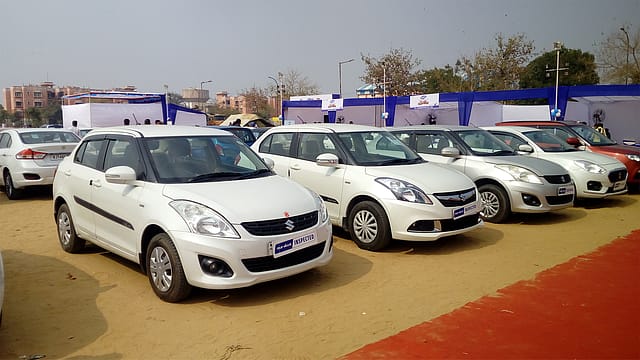
India’s used-car market is on the cusp of a structural reset, one that could see it double in size to nearly $70 billion by FY31, according to a new report by Redseer Strategy Consultants. But beyond the headline growth, a more consequential shift is underway: the transformation of a fragmented, trust-deficit market into an organised, platform-led ecosystem.
At present, India is the world’s fifth-largest used-car market. Over the next five years, it is expected to climb to third position, trailing only the United States and China. Annual retail transactions are projected to reach 9–10 million units by FY31, even as the market continues to grow faster than its global peers. Yet, for all its scale, the sector remains underpenetrated. India’s used-to-new car ratio hovers around 1.3–1.4, well below mature markets, highlighting both inefficiencies and untapped potential.
What’s driving demand in India’s used-car market?
The demand side is being shaped by a new consumer profile. Nearly 65% of used-car buyers in India are first-time owners, turning what was once seen as a compromise purchase into a milestone decision. With rising incomes and improving credit access, the addressable market is expanding rapidly. Redseer estimates that by FY31, roughly 280 million households could be financially capable of buying a used car. As Bhatnagar notes, this makes buying a used car “one of the biggest transactions in a person or household’s lifetime,” underscoring its emotional and financial weight.
“Used-car purchases are no longer driven purely by affordability constraints,” says Kushal Bhatnagar, associate partner at Redseer. “They are increasingly about value optimisation, quality assurance, and convenience.”
How is supply evolving and pushing premiumisation?
This shift in consumer intent is being matched by improving supply quality. Replacement cycles, historically as long as seven to eight years, are expected to compress to four to five years by the end of the decade, with metros leading the transition. Faster upgrade cycles—driven by technology adoption, regulatory changes such as scrappage norms, and a proliferation of new models—are feeding a younger inventory pool into the resale market. The effect is visible in pricing, with average selling prices expected to rise to ₹6.5–6.9 lakh, reflecting premiumisation. As Bhatnagar explains, this is creating “a virtuous cycle — more supply of better-quality vehicles, more frequent transactions, and premiumisation that expands the value pool faster than volumes alone would suggest.”
Even so, structural inefficiencies remain stark. Nearly 80% of transactions continue to flow through unorganised channels—independent dealers and peer-to-peer sales—where pricing is opaque, inspections inconsistent, and financing limited. For buyers, the process is often uncertain; for sellers, it can be cumbersome, involving delayed payments and ownership transfers. As Bhatnagar points out, these channels operate “where there is no standardized inspection, no warranty, opaque pricing, and limited financing access,” highlighting the depth of the trust deficit.
Can organised players solve the trust deficit?
This persistent trust gap has historically capped growth but is now creating an opening for organised, full-stack players like Spinny, which is seeking to standardise the experience end-to-end. Unlike traditional dealers or classifieds platforms, these companies control sourcing, inspection, refurbishment, pricing, financing, and documentation, turning a fragmented transaction into a managed service. As Bhatnagar notes, full-stack players are “building the trust-led ecosystem by owning the entire value chain,” enabling consistent quality and pricing premiums.
Their scale remains modest, accounting for roughly 2% of the market today. However, Redseer expects their share to rise to 5–6% by FY31, translating into a $4 billion opportunity, with gains concentrated in urban markets where digital adoption is higher.
For investors, the implications are clear. While the broader market is expected to grow steadily, full-stack platforms are projected to outpace it, benefiting from operating leverage and rising consumer trust. The model’s complexity—spanning logistics, refurbishment infrastructure, and working capital—also creates entry barriers, lending it defensibility. As Bhatnagar notes, the opportunity offers “a large and fast-growing TAM, proven path to profitability, structural defensibility, and macro resilience.”
India’s used-car market, long seen as an adjunct to the primary automotive sector, is emerging as a central pillar of the mobility landscape. The next phase of growth will depend less on demand—which is already robust—and more on fixing the trust and experience gaps that have long held it back. If organised players can crack that, current projections may prove conservative.