
India has gamers. JetSynthesys wants ownership of gaming IP
ADVERTISEMENT
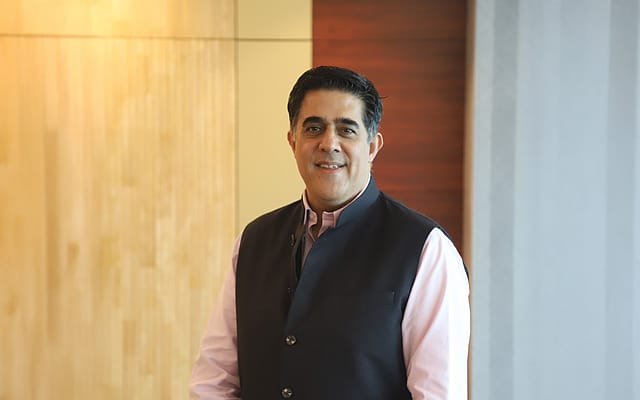
India may be one of the world’s largest gaming markets, but it still owns very little of the business behind gaming. For Rajan Navani, Chairman, JetSynthesys, that imbalance sits at the centre of India’s next digital opportunity. “We have 17% of the world’s gamers, but less than 2% of the industry,” Navani says. “More than 90% of the economic value still comes from global IPs.”
Over the past few years, JetSynthesys has built on esports, cricket gaming, regional entertainment, creator platforms and, more recently, global gaming intellectual property through its acquisition of EverMerge, a globally successful mobile game from Big Fish Games, which is generating about $350 million in lifetime revenue and ranking among the top 100 highest-grossing mobile games of all time.
One of the clearest outcomes of that strategy is NODWIN Gaming, the esports company that was incubated by JetSynthesys and is now preparing for its IPO journey. The move comes at a time when India’s gaming industry is trying to move beyond the turbulence caused by the crackdown on real-money gaming and reposition itself as a more sustainable entertainment business.
Regarding NODWIN Gaming's future, Navani says that the company feels proud to have been a part of it. "For JetSynthesys, we feel very privileged to have played a role in helping shape not just NODWIN, but even the Nazara IPO story earlier. NODWIN was a big part of that ecosystem." The company consolidated it with Nazara strategically because it believed it would create stronger long-term value and scale opportunities.
"Now, with NODWIN itself looking at a listing, I think it is a very clear success metric of what has been built over the last eight years," he further added.
“We see ourselves as ecosystem builders first,” Navani says. “Once strong ecosystems are created, value creation follows naturally.” That ecosystem-first approach increasingly mirrors the direction India’s wider media and entertainment industry is taking. According to the latest FICCI-EY report, gaming and esports are now entering the mainstream, with interactive media emerging as a core pillar of India’s media economy.
The shift is already visible in the numbers. India’s media and entertainment sector grew 9% in 2025 to reach ₹2.78 trillion, while digital media overtook television as the industry’s largest segment.
Moving beyond the real-money gaming era
For years, much of India’s gaming boom was driven by fantasy gaming and betting-linked platforms. JetSynthesys largely stayed away from that space. “We never got tempted by the short-term profitability of real-money gaming,” Navani says. “We believed gaming IP creation and esports would become much larger long-term opportunities.”
That call now appears more significant as the sector recalibrates. The FICCI-EY report noted that India’s online gaming and video games segment declined 17% in 2025 following the ban on money gaming, even as in-app purchases and mobile gaming ecosystems continued to grow.
Navani believes the next phase of growth will come not from transactional gaming models, but from ownership — of platforms, creators, communities and intellectual property. That thinking also explains JetSynthesys’ push into esports and cricket gaming through the Global E-cricket Premier League, (GEPL), as well as its broader investments across interactive entertainment.
“India is cricket crazy,” he says. “There’s no reason a gaming IP around cricket cannot become massively valuable.” Yet building globally competitive games remains difficult. Navani describes India as being “50 years late” to the gaming industry because it missed earlier waves built around consoles, PCs and broadband infrastructure.
The result is a country with massive gaming audiences but relatively limited world-class development capability.
Why JetSynthesys is chasing global IP
That capability gap is one reason JetSynthesys acquired EverMerge earlier this year. For Navani, the deal was not simply about acquiring a successful game. It was about acquiring global talent, production expertise and institutional knowledge that India is still building.
“You cannot replicate the experience of a $200-billion industry overnight,” he says. “It will still take India another 10 to 15 years to build some of those capabilities at scale.” The company has also partnered with Japan’s Digital Hearts to train Indian gaming talent using Japanese game development systems and quality processes.
Navani argues that Indian companies now need to move beyond functioning as backend service providers for global gaming firms. “India has constantly served the world as a backend,” he says. “Now Indian companies need to own IP, access global talent and compete internationally.”
That broader shift is increasingly being reflected across India’s media economy. The previously mentioned report argues that the next stage of growth for Indian entertainment will come from building globally scalable intellectual property rooted in Indian storytelling.
Regional language content now accounts for more than half of India’s OTT consumption, according to the report, highlighting how deeply local storytelling is shaping digital consumption patterns. That is central to JetSynthesys’ strategy as well. Today, the company spans gaming, esports, music, creators and live entertainment. Its regional music business generated more than 37 billion views last year, reflecting Navani’s belief that the next wave of entertainment consumption will come from Tier-II and Tier-III India. “If you look at the future of entertainment consumption, a lot of it is coming from Bharat,” he says.
AI, creators and the ‘orange economy’
Navani describes this broader shift as part of India’s emerging “orange economy”, the monetisation of India’s cultural and creative ecosystems. For him, that includes gaming IP, esports leagues, creators, regional entertainment and AI-powered digital experiences.
“India’s soft power will come from creators, storytelling and digital IP,” he says.
Artificial intelligence is expected to sit at the centre of that transformation. JetSynthesys is already using AI across gaming workflows, content testing and consumer personalisation. “AI will replace people who are not using AI,” Navani says. “People who adapt to AI will become significantly more productive.” The wider industry is moving in the same direction. The FICCI-EY report noted that AI is increasingly reshaping content production, audience engagement and monetisation across entertainment formats.
At the same time, creators are beginning to function like independent media businesses of their own, another trend Navani believes will fundamentally reshape entertainment economics in India. “Creators are building teams, communities and monetisation ecosystems around themselves,” he says.
The larger bet, ultimately, is that India’s next major digital export may not just be software or services, but entertainment ecosystems built on culture, fandom and intellectual property. “We want to build globally competitive entertainment ecosystems from India,” Navani says. “That’s the larger vision.”