
Iran war impact: Iran trade route disruption raises risks for Indian exporters and FMCG companies
ADVERTISEMENT
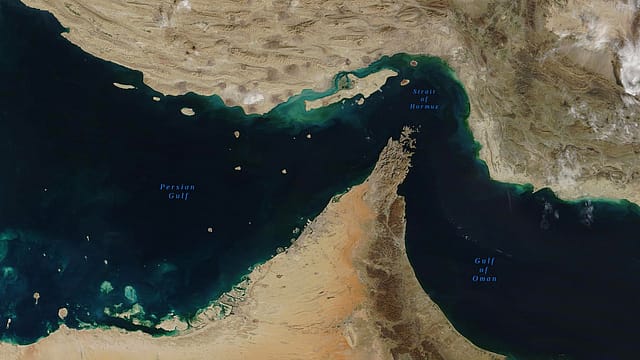
The conflict in West Asia is beginning to squeeze Indian exports and FMCG supply chains linked to Iran, with disruptions in shipping routes, rising insurance costs and fresh input price pressures creating a two-front challenge for exporters and consumer goods companies.
The immediate pressure point is logistics. With routes through the Strait of Hormuz disrupted, Indian exporters are facing delays, higher freight bills and growing uncertainty over deliveries into Iran and the wider region. That matters because West Asia remains a key market for India across food products, pharmaceuticals, chemicals, engineering goods and consumer products.
Tanvi Kanchan, associate director at Anand Rathi Share and Stock Brokers Limited, said the conflict has already delivered a direct shock to India’s export supply chains. “There has already been flagged almost an $11.8 billion worth of India’s agricultural and food exports to the region are now at risk, with approximately 4 lakh tonnes of Basmati rice stuck at ports or stranded in transit as shipping routes through the Strait of Hormuz have been disrupted and war-risk insurance premiums have spiked sharply,” she said.
That is especially significant for Iran. Kanchan said Saudi Arabia, Iran, Iraq, the UAE and Yemen together account for nearly 60-70% of India’s total basmati exports by value. “Iran alone, once India’s largest Basmati buyer, remains among the top three destinations, which makes the Iran angle particularly acute,” she said.
What is driving the immediate disruption?
Industry executives said the first impact is being felt through shipping and cargo bottlenecks. According to Kanchan, Indian FMCG companies serving Gulf markets are already seeing orders cancelled or deferred, shipments delayed and freight costs rising sharply. She said shipping lines have imposed a war-risk surcharge of roughly $2,000-3,000 per container, while air cargo capacity through Gulf hubs has collapsed by over 90%.
That has forced some exporters to consider rerouting around the Cape of Good Hope, adding 14-25 days to transit time.
Sandeep Abhange, research analyst - Consumer and Midcaps at LKP Securities, said any disruption around the Strait of Hormuz, through which nearly 30% of global seaborne oil trade passes, could raise freight costs by 20-30%, affecting both input sourcing and exports to markets such as Iran.
For FMCG and food products headed to Iran, that is not a minor adjustment. Longer transit periods can raise spoilage risks for goods with limited shelf life and complicate inventory planning for both exporters and distributors.
Anthony Rajan, CEO of Vayana TradeXchange, a supply chain financing company, said the damage is likely to come more from logistics and financial friction than from an immediate collapse in demand. “West Asia is a key market for Indian exporters, particularly for food products, pharmaceuticals, and consumer goods. The immediate impact of the conflict is likely to be felt through logistics, higher freight costs, insurance premiums, and shipping delays,” he said.
He added that trade with Iran carries an additional layer of complexity. Exporters of FMCG and food products to Iran may also face payment delays, he said, given the already limited banking channels available for trade with the country.
How could the conflict hit FMCG supply chains beyond exports?
The second channel of stress is input cost inflation at home. Kanchan said crude oil has moved from the mid-$80s to $92-95 per barrel, with $100-110 seen as a risk scenario, pushing up packaging material costs and other petrochemical-derived inputs that are widely used in the FMCG sector.
Abhange said that if the conflict pushes crude sustainably above $90 a barrel from the recent $75-80 range, FMCG companies could face 100-150 basis points of gross margin pressure over the next two quarters, given that 8-12% of their cost base is linked to crude derivatives such as packaging materials like PET and HDPE, LAB used in detergents, and logistics. He added that while large FMCG players may stagger 1-3% price hikes, sustained crude volatility could still compress margins if companies delay passing on the costs to protect volumes.
Srikhant Kanhere, MD and CEO of AWL Agri Business , said the volatility in crude prices is already affecting plastics and laminates. “The Iran conflict’s volatility in crude oil prices tends is increasingly impacting packaging inputs such as plastics and laminates, which are key materials widely used across the FMCG sector,” he said. Companies, he added, are trying to manage the impact through cost optimisation, procurement changes, packaging efficiencies and closer supplier coordination.
Thimmaiah NP, MD and CEO of Alternicq Limited, India’s largest rigid plastic packaging company, said the packaging industry is seeing a sharp rise in polymer prices, particularly PET, HDPE and PP, along with tighter supply. He said larger brands with long-term contracts are relatively better insulated, while spot buyers and smaller players may struggle with volatility, raw material access and working capital.
The broader exposure is substantial. Kanchan noted that GCC and West Asia account for about 14% of India’s total exports, while the region contributes roughly 38% of India’s inward remittances. For now, the disruption may remain manageable if the conflict eases quickly. But if it persists, exporters to Iran and FMCG companies reliant on Gulf-linked trade routes could face a deeper reset in costs, transit times and supply chain planning.