
Middle East conflict disrupts trade routes; CII says India responding with “calibrated” steps
ADVERTISEMENT
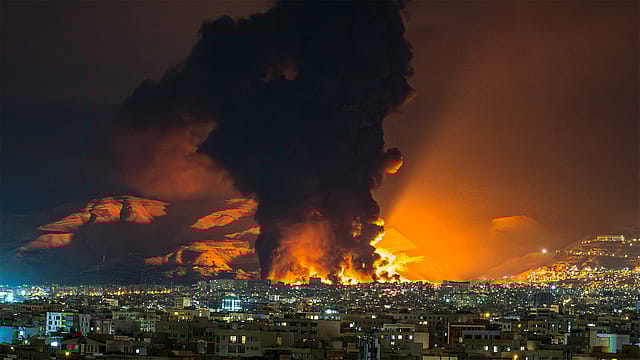
India’s top industry body today flagged growing stress on supply chains and energy availability as the Middle East conflict ripples through global trade routes, even as it maintained the country’s relative resilience and swift policy response.
In a statement, Chandrajit Banerjee, director general of the Confederation of Indian Industry (CII), said disruptions in critical maritime corridors are already being felt by Indian companies through shipment delays and tightening access to key inputs.
“The conflict in the Middle East has disrupted critical maritime routes and placed pressure on global supply chains, energy markets, and both imports and exports,” Banerjee said. “Indian companies are experiencing downstream effects, from shipment delays to constraints in key energy inputs, as well as emerging shortages in essential raw materials and intermediates.”
Government moves to cushion impact
The comments come at a time when global energy flows and shipping lanes remain under strain, raising concerns for import-dependent economies like India. However, Banerjee noted that India entered this phase “from a position of strength,” pointing to years of economic reforms and the government’s push for self-reliance.
He said the government’s response has been “quick, calibrated and continuous,” highlighting measures such as crude oil diversification, maximisation of LPG production, export facilitation, and steps to stabilise the currency.
“The Government has moved decisively on several fronts,” he said, adding that industry-support initiatives to help companies manage operational pressures have come at a critical time.
Banerjee also pointed to broader structural shifts underway in the energy sector. He said the current situation reinforces the need to accelerate investments in renewable energy, green hydrogen, biofuels, and efficiency measures to reduce exposure to geopolitical shocks.
“These are not only climate commitments but also strategic imperatives,” he said.
At the same time, Indian companies are actively adapting to the evolving situation. “Indian industry is not a passive recipient of these shocks. It is actively accelerating energy diversification, optimising supply chains and protecting jobs,” Banerjee noted.
The statement also highlighted the government’s outreach to Indian nationals in the Gulf and ongoing consular support, describing it as part of a broader preparedness framework in a volatile regional environment.
CII said it is working closely with both industry and the government to track vulnerabilities, particularly shortages of raw materials and intermediates, while providing real-time feedback from affected sectors.
While acknowledging that the challenges remain significant, Banerjee struck a note of cautious confidence. “We are confident that the Government’s whole-of-government approach, combined with its partnership-driven engagement with all stakeholders, will help India withstand this shock and preserve its forward economic momentum,” he said.