
Tata Sons listing to unlock value, deepen capital markets
ADVERTISEMENT
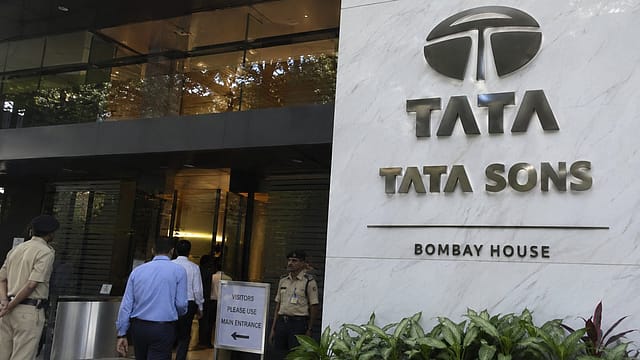
Tata Sons' board resolving to comply with Reserve Bank of India guidelines that require the group's holding company to list could reshape India's equity markets by unlocking value trapped in one of the country's largest and most complex corporate structures, market participants said..
The board also reappointed N. Chandrasekaran as Executive Chairman for a further five-year term, securing leadership continuity.
Tata Sons sits atop a portfolio spanning steel, software, automobiles, hospitality, aviation and financial services, valued in hundreds of billions of dollars. Much of that obscured value is currently within the holding company's web of cross-holdings in listed and unlisted group businesses. A public listing would force disclosure and valuation of those stakes for the first time, giving investors a direct line of sight into assets that have long traded at a discount to their true worth.
Brokers said the listing carries major implications for market depth, transparency, valuation and investor participation, calling it a marker of India's progress toward becoming a global capital-market powerhouse. The move gives millions of retail shareholders a way to gain exposure to a broad set of well-governed, market-leading Tata businesses through a single investment, they said.
Corporate governance advisory firm InGovern Research Services in a report said an initial public offering would benefit the roughly 1.77 crore (non-unique) shareholders across Tata group companies that hold indirect exposure to Tata Sons through their stakes in the holding firm.
A potential offering could be among India's largest, with reports pointing to a deal size of at least $5 billion and a valuation above ₹20 lakh crore, though the final size would hinge on how much of the company is sold down, it said.
Markets have already begun pricing in the potential gains: shares of group companies, including Tata Power and Tata Motors' passenger-vehicle arm, rose in recent sessions on expectations that a listing would unlock value in their cross-holdings of the parent.
The listing requirement stems from Tata Sons' classification as an upper-layer non-banking financial company, a status the RBI recently declined to lift, reviving a mandatory listing obligation first triggered in 2022.
Chandrasekaran's reappointment also follows a period of uncertainty over the leadership of Tata Sons. He had indicated in August that he would not seek another term when his existing tenure expires in February 2027, before the board subsequently backed his continuation for another five years.
Taken together, analysts say the two decisions send a coordinated signal: leadership stability paired with greater transparency. For a conglomerate long synonymous with trust in Indian business, the listing is being cast as a structural shift - one that could sharpen price discovery across the group and strengthen investor confidence in Indian markets more broadly.
For India's capital markets, a Tata Sons listing could provide investors with direct exposure to the holding company behind the salt-to-software, cars and airline conglomerate.
"Millions of Indian retail shareholders will benefit from the Tata Sons listing," a leading brokerage said. "It represents an opportunity to get exposure to a large bouquet of the most well governed, market-leading Crown Jewels of the Tata Group through a single investment."
The listing decision, however, comes amid the opposition from Tata Trusts, which collectively own about 66 per cent of Tata Sons. Trust chairman Noel Tata has argued that the company should explore alternatives to a public listing, while the Shapoorji Pallonji Group, which holds about 18.4 per cent, has backed a listing.
The SP Group's position aligns the second-largest shareholder with the Tata Sons board on the listing question, although the Trusts retain a substantial majority stake.
The leadership decision is significant because Chandrasekaran has overseen a period of expansion and restructuring across the Tata Group, including its push into semiconductors, electronics manufacturing, aviation and other strategic sectors.
The Tata Trusts had previously supported his stewardship, but Noel Tata opposed the latest board decision to reappoint him. The Trusts have challenged the validity of the resolution, adding a separate governance dispute to the listing question.
For the capital markets, the potential listing could also bring greater visibility to the value of Tata Sons' holdings in listed and unlisted Tata businesses.
Vignesh Nagappan, President of TamilNadu Investors' Association, said the reappointment of Chandrasekaran is a positive development from the perspective of the potential listing of Tata Sons. "This is the first step, but there is still a lot of work to be done."
"If Tata Sons gets listed, it would be a positive development for investors, as it would give them an opportunity to own a part of one of the country's largest business groups," he said. "There are several large issues like Jio Platforms lined up that could absorb liquidity from the market.
"Despite this, we expect the market to remain in a consolidation phase. A Tata Sons listing would be positive news, especially for retail investors, as it would give them an opportunity to participate in the company."
Tata Sons sits at the centre of the Tata Group, with stakes in businesses ranging from Tata Consultancy Services and Tata Motors to Tata Steel, Tata Power, Indian Hotels and Air India. A listing would give investors a direct stake in the holding company rather than exposure only through individual listed Tata companies.
The RBI's decision has therefore, transformed what had been a prolonged debate over Tata Sons' regulatory status into a more immediate question of how and when the company will comply with the listing framework.
The outcome will also have implications beyond the stock market. Tata Trusts' controlling ownership, the SP Group's substantial minority stake and the board's authority will all have to be reconciled as Tata Sons moves through the next stage of the process.
The listing could ultimately provide greater public disclosure and market-based valuation of the holding company, but its timing, structure, valuation and impact on the existing Tata Sons governance model remain to be determined.