
Trump threatens 25% tariffs on EU cars and trucks over "non-compliance"
ADVERTISEMENT
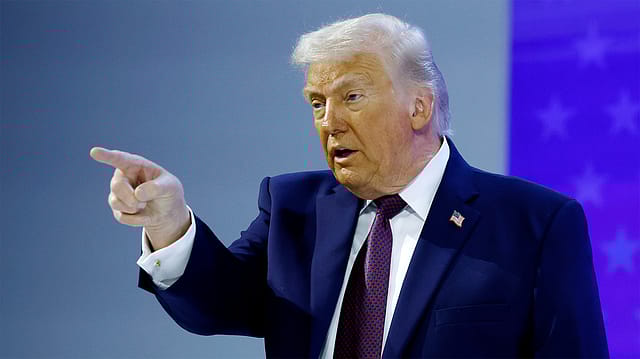
U.S. President Donald Trump has announced plans to raise tariffs on cars and trucks imported from the European Union to 25%, which would come into effect from next week.
In a Truth Social post, Trump said the move was prompted by what he described as the EU’s failure to comply with an existing agreement. “Based on the fact the European Union is not complying with our fully agreed to Trade Deal, next week I will be increasing Tariffs charged to the European Union for Cars and Trucks coming into the United States,” he wrote. “The Tariff will be increased to 25%.”
He also reiterated that companies manufacturing within the U.S. would be exempt. “If they produce Cars and Trucks in U.S.A. Plants, there will be NO TARIFF,” Trump added, framing the decision as a push to accelerate domestic production. He further pointed to ongoing investments, claiming more than $100 billion is being poured into new automobile and truck manufacturing facilities, which he described as “a record in the history of car and truck manufacturing”.
Trade deal strain and EU backlash
The latest move comes less than a year after Trump and European Commission President Ursula von der Leyen reached a trade understanding in July 2025 that set tariffs at around 15% on most goods, including automobiles and components. The framework, informally referred to as the Turnberry Agreement, was intended to stabilise trade ties and prevent further escalation.
However, the status of agreement has been questioned in recent months. Earlier this year, the U.S. Supreme Court ruled that the President did not have the authority to invoke an economic emergency to justify tariffs on EU goods. The decision effectively pushed the permissible tariff level lower to 10%, forcing the administration to consider alternative legal mechanisms to maintain or raise duties.
European officials have reacted sharply to Trump’s latest announcement. Bernd Lange, chair of the European Parliament’s trade committee, told Reuters the move shows a breakdown in trust. “This latest move demonstrates just how unreliable the U.S. side is,” he said. “This is no way to treat close partners.”
Calling the decision “unacceptable,” Lange added that the European Union had continued to honour the terms of last year’s agreement. He warned that Brussels would respond “with the utmost clarity and firmness,” signalling the possibility of retaliatory action.
The timing adds further strain to an already fragile relationship, with Europe grappling with elevated energy costs linked to ongoing geopolitical tensions in the Middle East.