
Why the FIFA World Cup 2026 could become the most transformational tournament in football history
ADVERTISEMENT
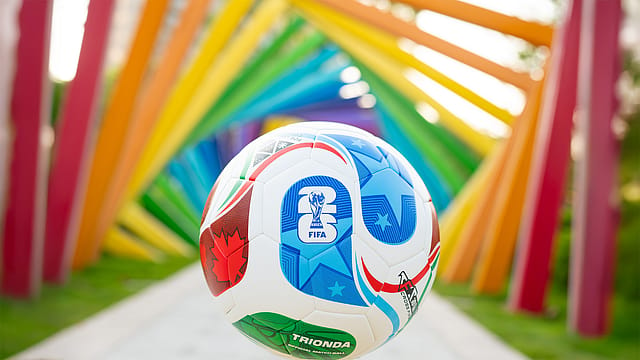
The FIFA World Cup has long stood as football’s most powerful commercial engine. But the 2026 edition — jointly hosted by the United States, Canada and Mexico — is set to take the tournament into an entirely new economic bracket.
For FIFA, the expansion is not just about sporting scale but business architecture. The competition will grow from 32 to 48 teams and expand to 104 matches, significantly increasing broadcast inventory, sponsorship visibility and global engagement opportunities.

The timing is crucial. Live sport remains one of the few content formats still capable of delivering mass, real-time global audiences at a time when entertainment consumption is increasingly fragmented across streaming platforms.
Inside FIFA’s expansion economics
FIFA generated about $7.5 billion during the 2019–2022 cycle, driven largely by the Qatar World Cup. Broadcasting rights formed the biggest revenue stream, followed by sponsorship and licensing income. Industry estimates suggest the 2026 edition is positioned to comfortably exceed those figures.
The structural expansion of the tournament unlocks additional advertising slots, longer engagement cycles and higher ticketing volumes. But the bigger shift is geographical: the World Cup is moving into North America, one of the world’s most mature and lucrative sports markets.
The United States brings together deep corporate sponsorship pools, premium stadium infrastructure and high consumer spending power. Combined with established broadcasting ecosystems, it creates a significantly larger monetisation base than previous editions.
Media-rights values are also expected to remain on an upward trajectory as global streaming platforms continue to compete aggressively for live sports properties.
The US market FIFA has pursued for decades
Football’s growth in the United States has accelerated over the past decade, driven by younger audiences, rising interest in European leagues and strong digital fandom. Lionel Messi’s move to Inter Miami further amplified mainstream attention and lifted Major League Soccer’s global visibility.
Apple’s 10-year streaming deal with MLS, valued at about $2.5 billion, underscored how streaming platforms are increasingly betting on football’s long-term upside in North America.
World Cup 2026 will be staged from 11 June to 19 July 2026, opening in Mexico City and concluding with the final at MetLife Stadium in New Jersey. The extended footprint across three countries and multiple time zones is expected to maximise both live attendance and broadcast reach across global markets.
How 48 teams reshape football’s business model
The expansion to 48 teams is expected to fundamentally widen football’s commercial base. More qualification slots for Asia, Africa and North America will bring new television audiences into the tournament ecosystem, strengthening regional sponsorship demand and diversifying revenue streams beyond Europe’s traditional dominance.
For broadcasters and advertisers, the logic is straightforward: more nations mean larger cumulative viewership and deeper penetration into fast-growing football markets.
As per hospitality industry analysts, the economic impact is also expected to extend beyond the stadiums. Travel operators, airlines, hotels and local businesses across host cities are already preparing for a surge in international visitors and tournament-driven consumption.
From television event to digital entertainment ecosystem
World Cup 2026 is also likely to be the most digitally integrated edition of the tournament to date.
While traditional television will still carry a large share of viewership, consumption patterns are shifting steadily towards mobile-first and streaming-led formats. Short-form video, creator-driven coverage and interactive digital experiences are becoming central to how younger audiences engage with live sport.
Technology firms continue to increase their exposure to premium sports rights because live events remain one of the last formats capable of delivering simultaneous global audiences at scale.
By 2026, features such as AI-generated highlights, personalised match feeds and multilingual streaming overlays are expected to be far more mainstream across football broadcasts.
The World Cup’s next commercial leap
Each World Cup leaves behind a structural shift in the business of football. The 1994 edition helped establish the sport in North America, while Qatar 2022 demonstrated the financial scale modern tournaments can command.
The 2026 tournament, however, may be defined by something broader: the transformation of the World Cup into a multi-platform global media and commercial ecosystem.