
Women drive India’s bus travel boom as journeys surge 136% since 2019: redBus
ADVERTISEMENT
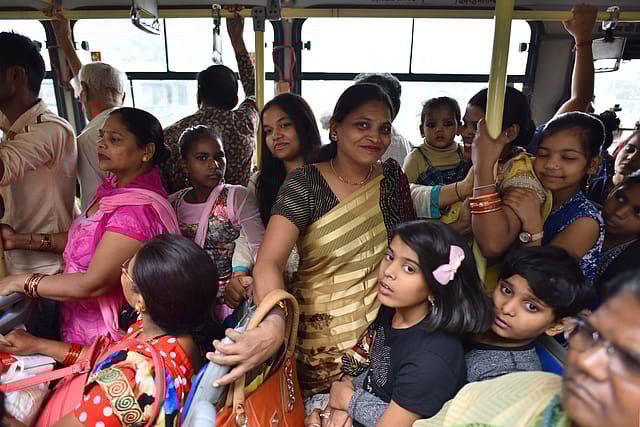
Women are emerging as one of the fastest-growing segments in India’s intercity bus travel market, reshaping mobility patterns across the country. The number of women travelling by bus has surged 136% between 2019 and 2025, nearly double the 72% growth recorded in overall passenger traffic, according to the Pink Report released by online bus ticketing platform redBus.
The report suggests that women are not only travelling more frequently but are also becoming a key growth driver for India’s bus transport ecosystem. Women now account for 33% of intercity bus travellers, up from 23% in 2019, indicating a steady rise in independent mobility and participation in long-distance travel.
Based on redBus platform data from 2019 to 2025 across private and government-run buses, the study maps how women’s travel patterns have evolved across regions, age groups and cities.
Is women’s bus travel growth becoming a nationwide mobility shift?
The growth in women’s bus travel is visible across every region of the country, pointing to a structural shift in mobility rather than a localised trend.
While South India continues to lead women’s participation, the share of women travellers has increased across all regions. Between 2019 and 2025, the share rose from 24% to 34% in the South, 23% to 31% in the West, 21% to 30% in the East, and 20% to 28% in the North.
The report also introduces a Women’s Mobility Index, which ranks states based on the share of women travellers, the proportion of solo journeys and the number of long-distance trips above 500 km. According to the index, the top five states for women’s bus mobility are Assam, Kerala, Andhra Pradesh, Punjab and Telangana.
Are Gen Z women and solo travellers driving the trend?
A generational shift is also driving the surge. Gen Z women aged 14–29 make up 60% of all women bus passengers, making them the largest contributor to the category’s growth.
Younger women are also significantly more comfortable travelling independently. Gen Z accounts for 68% of all solo trips taken by women, signalling rising confidence among younger travellers when it comes to intercity mobility.
The data suggests buses are increasingly becoming a preferred mode of travel for students, early-career professionals and young travellers seeking affordable connectivity between cities.
Is small-town India driving the next wave of demand?
Much of the growth is coming from outside India’s largest cities. The report shows that 68% of women bus travellers originate from Tier-2 and Tier-3 towns, highlighting the role of buses as a crucial transport link connecting smaller towns and cities.
The shift reflects rising workforce participation among women in smaller cities, along with increasing internet penetration and wider adoption of digital ticketing platforms.
Women travellers also display distinct booking behaviour. About 62% of women book their bus tickets at least one day before travel, compared with 48% of male passengers, suggesting stronger planning habits among women travellers.
How do trust and safety influence women’s travel decisions?
Safety and trust continue to shape travel choices for women. Nearly 47% prefer buses that are highly rated by other women travellers, while 33% check how many other women have already booked seats on the bus before making a booking decision.
During the journey, staff behaviour (50%) and the ability to share live tracking with trusted contacts (48%) are the most important factors influencing women’s travel experience.
Is mobility becoming a tool of empowerment for women?
For redBus, the findings point to a deeper shift in how women are participating in India’s mobility economy.
“Women’s travel today reflects more than just rising journeys—it signals a growing sense of independence,” said Prakash Sangam, CEO of redBus. “More women across India are travelling for work, education and opportunity. Our focus is on strengthening trust and safety features so that intercity travel becomes more reliable and empowering for women.”
As digital adoption deepens and connectivity improves, women’s participation in intercity bus travel is expected to continue rising. For India’s bus transport sector, that could mean one thing: the next phase of growth may increasingly be driven by women travellers.