
Economic Survey 2026: Country stands to gain immensely from delayed gratification, says CEA Anantha Nageswaran
ADVERTISEMENT
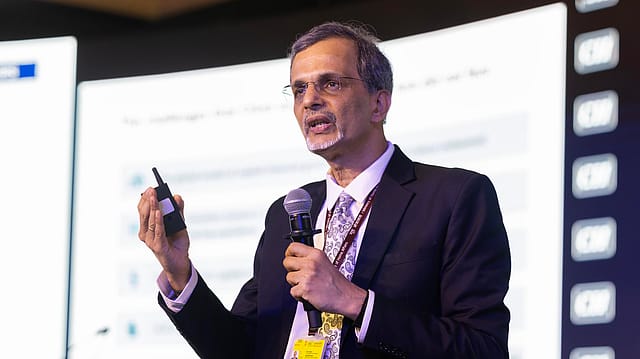
Amid a challenging geopolitical landscape upended by unilateral trade tariffs by the U.S., the Economy Survey 2026 has painted a picture of resilience as far as the country’s economic growth is concerned.
In his closing remarks of the preface in the survey, V. Anantha Nageswaran, chief economic advisor, mentions that the economy retains momentum, and growth is likely to be sustained into FY27
The chapter also introduces our nowcasting model, which integrates high-frequency indicators to assess growth in the ongoing and subsequent quarters. After three years of operational use and validation, the model has matured into a reliable tool for monitoring near-term macroeconomic conditions in real time, states Nageswaran.
The survey has revised India’s potential growth rate to 7.0%, up from 6.5% three years ago. “At that time, we correctly anticipated weaker global tailwinds, particularly from exports, but also noted that sustained domestic reforms and public investment could lift the economy’s underlying growth capacity. That possibility is now being realized,” mentions the CEA’s commentary.
Nageswaran believes the expansion of infrastructure—illustrated by the doubling of the airport network over the past decade and the rapid growth of freight movement through inland waterways—is easing logistics constraints and raising economy-wide efficiency.
Subdued trajectory of core inflation
Interestingly, the CEA points out that while headline inflation continues to reflect volatility in food prices, the subdued trajectory of core inflation (excluding gold and silver) indicates a strengthening of supply-side conditions across the economy, consistent with rising productive capacity and improved logistics.
Touching upon the robustness of the MSME sector, Nageswaran explains that sustained state-level deregulation efforts are enabling small and medium enterprises to expand and integrate more effectively into formal value chains, elevating the economy’s medium-term growth potential.
Quoting a passage from the Katha Upanishad ascribed to Yama (The God of Death), Nageswaran writes: “Every moment asks us to choose between Śreya, the enduring good, and Preya, the fleeting comfort. The mature mind chooses Śreya; the immature mind settles for Preya. In other words, the country stands to gain immensely when all of us embrace delayed gratification.”
Highlighting the challenges posed by the global environment, Nageswaran notes that geopolitical realignments will influence investment, supply chains, and growth prospects for years to come. Noting that it is an opportune time for India to capitalize on the investment potential, the CEA believes “India must choose to build resilience, innovate relentlessly, and stay the course toward Viksit Bharat, rather than seek quick fixes to visible, short-term pressures.”
The good news, on balance, is that the evidence presented in this survey shows that India will choose well, sums up Nageswaran.