
RBI MPC outcome: Central bank projects 6.9% GDP growth, 4.6% inflation for FY27
ADVERTISEMENT
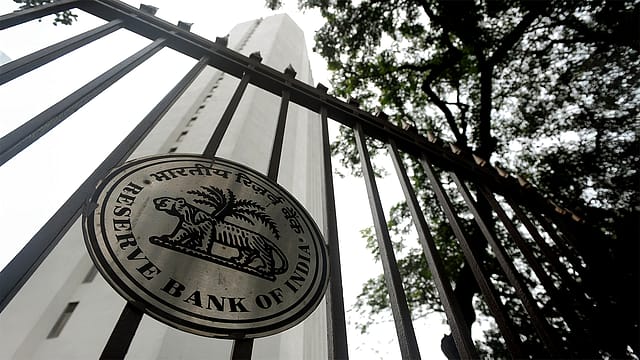
The Reserve Bank of India (RBI) on Wednesday maintained the status quo in its latest policy announcement and projected economic growth at 6.9% for FY27 while announcing the outcome of its April Monetary Policy Committee (MPC) meeting. This is lower than the 7.6% economic growth recorded in the previous fiscal year.
The central bank has projected real GDP growth at 6.9% for the next fiscal, with quarterly estimates at 6.8% in Q1, 6.7% in Q2, 7% in Q3, and 7.2% in Q4, while retail inflation is expected at 4.6% for the year.
“Taking all factors into consideration, real GDP growth for this year is projected at 6.9%, while CPI inflation is projected at 4.6%, with risks tilted to the upside,” said RBI Governor Sanjay Malhotra while announcing the MPC policy outcome.
The Monetary Policy Committee (MPC), which met from April 6 to 8, unanimously decided to keep the repo rate unchanged at 5.25%, while retaining a neutral stance to balance growth and inflation risks.
“The MPC decided to keep the policy repo rate unchanged and continue with the neutral stance, retaining flexibility to respond to evolving conditions,” he said.
Malhotra noted that India’s macroeconomic fundamentals remain strong despite increasing global headwinds.
“The fundamentals of the Indian economy are on a stronger footing at the current juncture, providing greater resilience to withstand shocks,” he said.
However, he cautioned that global growth faces rising downside risks due to elevated energy prices and geopolitical tensions, particularly the West Asia conflict.
“Heightened geopolitical tensions and supply disruptions have increased uncertainty and pushed up inflation risks globally,” he said.
On inflation, the RBI observed that while headline inflation remains below target, upside risks have increased due to rising energy prices and possible weather-related disruptions. “Upside risks to inflation have increased, driven by higher energy prices and potential weather-related disturbances,” Malhotra said.
The governor highlighted multiple channels through which the ongoing conflict could impact India, including higher crude oil prices, supply chain disruptions, and financial market volatility. “Elevated crude oil prices could widen the current account deficit and increase imported inflation, while global uncertainty may impact growth and financial conditions,” he said.
Despite these risks, domestic growth remains supported by strong consumption, a resilient services sector, and improving investment activity. “Strong domestic demand, supported by consumption and investment, continues to underpin growth momentum,” he noted.
Meanwhile, the RBI kept key policy rates unchanged while retaining a “neutral” stance to balance economic growth with emerging inflation risks amid geopolitical tensions and a sharp spike in crude prices.
At the first meeting of the financial year 2026–27, held from April 6 to 8, the Monetary Policy Committee (MPC), chaired by RBI Governor Sanjay Malhotra, unanimously voted to keep the repo rate unchanged at 5.25%. The standing deposit facility (SDF) rate was also maintained at 5.0%, while the marginal standing facility (MSF) rate and the bank rate were kept steady at 5.50%.
The central bank had last reduced the repo rate by 25 basis points (from 5.50%) in December 2025. In the previous bi-monthly policy meeting in February 2026, the apex bank had left rates unchanged and maintained a “neutral” stance.
Meanwhile, the RBI kept key policy rates unchanged while retaining a “neutral” stance to balance economic growth with emerging inflation risks, amid geopolitical tensions and a sharp spike in crude prices.
At the first meeting of the financial year 2026-27, held from April 6 to 8, the monetary policy committee (MPC), chaired by RBI governor Sanjay Malhotra, unanimously voted to keep the repo rate unchanged at 5.25%. The standing deposit facility (SDF) rate was also maintained at 5.0%, while the marginal standing facility (MSF) rate and the bank rate were kept steady at 5.50%.
The central bank had last reduced the repo rate by 25 basis points (from 5.50%) in December 2025. In the previous bi-monthly policy meeting in February 2026, the apex bank had left rates unchanged and maintained a “neutral” stance.