
Trump warns Iran on Hormuz leverage, signals tough stance ahead of talks; energy markets on edge
ADVERTISEMENT
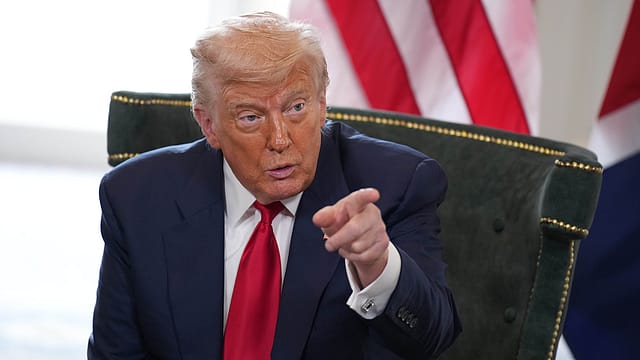
Untied States President Donald Trump has struck a hard line ahead of fresh US-Iran negotiations, downplaying Tehran’s bargaining power while flagging its control over the strategically vital Strait of Hormuz as the only meaningful leverage.
“We’re going to try to have a positive negotiation,” Trump said, adding, “If the Iranians are willing to negotiate in good faith, we’re certainly willing to extend the open hand. If they’re going to try to play us, then they’re going to find the negotiating team is not that receptive.”
In a sharper assertion, Trump indicated that Washington could act unilaterally to secure maritime flows if talks falter. “We’re going to open up the gulf with or without them… or the strait as they call it. I think it’s going to go pretty quickly, and if it doesn’t, we’ll be able to finish it off,” he said, signalling a willingness to escalate pressure if negotiations stall.
The comments come as JD Vance reiterated the administration’s dual-track approach of diplomacy backed by firmness, noting that the US remains open to constructive engagement but wary of tactical delays by Tehran.
The rhetoric has injected fresh uncertainty into global energy markets, with the Strait of Hormuz—through which nearly a fifth of global oil supply transits—once again emerging as a geopolitical flashpoint. Even the prospect of disruption has historically led to spikes in crude prices, insurance costs and freight rates.
Trump’s red Lines, market signals
Trump’s remarks underscore a calibrated strategy—keeping diplomatic channels open while signalling clear red lines on maritime security and energy flows. For markets, this raises the likelihood of near-term volatility, particularly if negotiations stretch or tensions escalate in the Gulf region, as per stock market analysts.
Industry analysts note that any disruption, or even heightened risk perception, could "tighten global supply conditions" and push up benchmark crude prices, feeding into broader cost structures across economies.
India’s energy exposure in focus
For India, the developments carry significant macroeconomic implications. As one of the world’s largest crude importers, the country remains highly sensitive to price shocks originating in West Asia. Petroleum Minister Hardeep Singh Puri has previously stressed the importance of supply diversification and strategic reserves to mitigate such risks.
Finance Minister Nirmala Sitharaman has also flagged how elevated oil prices can feed into imported inflation and strain fiscal balances. As a result, the trajectory of US-Iran talks—and Trump’s hardening stance—will be closely tracked by policymakers and industry alike.