
Serious consequences likely if West Asia conflict persists, warns PM Modi
ADVERTISEMENT
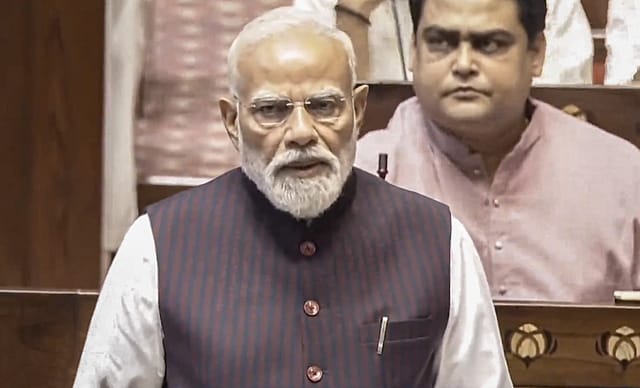
Prime Minister Narendra Modi on Tuesday cautioned that a prolonged conflict in West Asia could have serious economic and strategic consequences, as he addressed the Rajya Sabha on the evolving crisis.
The Prime Minister said the ongoing crisis has disrupted key trade routes, affecting the regular supply of petrol, diesel, gas, and fertilisers while adding that India is actively working to secure crude oil and gas supplies from all possible sources and will continue efforts to stabilise availability in the coming days.
India’s energy preparedness
Highlighting India’s energy preparedness, the Prime Minister said the country has built 53 lakh metric tonnes of strategic oil reserves over the past 11 years, with an additional 65 lakh metric tonnes of capacity under development.
He informed the House that several Indian crew members remain stranded in the Strait of Hormuz due to the ongoing crisis, adding that the government is taking steps to ensure the safety and welfare of Indian citizens in the Gulf region.
In a push to strengthen maritime capabilities, Modi announced that the government has launched a ₹70,000-crore project to boost domestic shipbuilding capacity.
All-party meeting tomorrow
The Centre has also convened an all-party meeting on March 25 at 5 pm to discuss the West Asia situation and its implications for India.
Ahead of the Prime Minister’s address, Defence Minister Rajnath Singh chaired a high-level meeting in New Delhi to review the security situation. The meeting, attended by the Chief of Defence Staff and the three Service Chiefs, focused on assessing India’s preparedness and response measures amid escalating tensions.
Officials briefed Singh on the current security environment and operational readiness, amid concerns over potential spillover effects of the conflict.
The West Asia conflict has now entered its fourth week, severely disrupting trade routes through the Strait of Hormuz. Tensions escalated following the killing of Ali Khamenei in joint military strikes by the US and Israel on February 28.
In retaliation, Iran has targeted Israeli and US-linked assets across several Gulf countries, further disrupting the vital waterway and intensifying volatility in global energy markets and the broader economy.