
Inside Fabelle’s decade-long bet on India’s luxury chocolate boom
ADVERTISEMENT
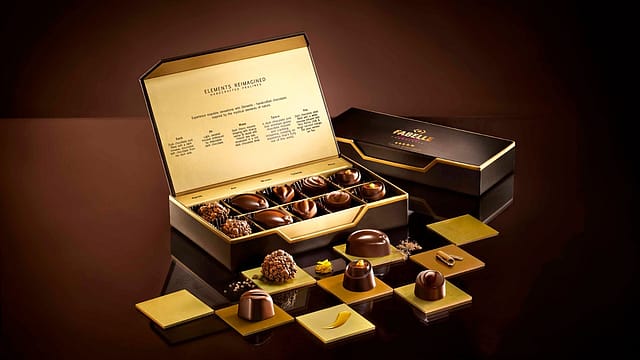
As India’s appetite for indulgence matures, home-grown luxury chocolate brand Fabelle is emerging as one of the clearest winners. A decade after launch, the brand—housed within ITC Limited—is riding a powerful combination of premiumisation, changing consumer tastes, and culinary innovation. In an interview with Fortune India, Subash Balar, Business Head – Confectionery, Chocolates & Coffee at ITC, explains how the market has evolved, why dark chocolate is booming, and how Fabelle plans to stay ahead.
A premium market comes of age
India’s chocolate market today is estimated at around ₹20,000 crore, but the real momentum lies at the top end. According to Subash Balar, the premium and luxury segment—roughly ₹1,000 crore in size—is growing at 15–20% annually, far outpacing the broader category’s 5–6% growth.
“For a long time, premium chocolate consumption in India was largely incidental—picked up during foreign travel or from duty-free stores,” says Balar. “Access was limited, cold-chain infrastructure was weak, and Indian palates leaned heavily towards sweet, milk-based flavours.”
That has changed rapidly over the past three to four years. Rising overseas exposure, the growth of quick commerce, and reliable cold-chain logistics have made high-quality chocolates widely available. At the same time, consumer tastes have evolved. “Dark chocolate was once a niche, even a rejection,” Balar notes. “Today, it’s one of the fastest-growing segments, driven by flavour complexity and health perception.”
From festive gifting to everyday indulgence
One of the most striking shifts, says Balar, is in how and when consumers buy luxury chocolate. Earlier, sales peaked sharply during Diwali. Now, gifting is distributed across the calendar—Rakhi, Valentine’s Day, Mother’s Day, weddings, Christmas, and even personal milestones.
More importantly, premium chocolates are increasingly consumed at home. “People are ordering rich boxed chocolates after dinner or when guests arrive—often as a replacement for traditional desserts,” he says. On quick commerce platforms, Fabelle has seen its higher-priced boxed assortments outperform bars, despite scepticism that consumers wouldn’t buy ₹1,600-plus products online.
“That told us something important,” says Balar. “Consumers aren’t just trading up—they’re buying into experiences.”
The Made-in-India luxury bet
Competing with global brands like Lindt, Godiva, and Royce as a homegrown label was never going to be easy. Fabelle’s advantage, Balar argues, lies in its access to ITC’s deep culinary ecosystem.
“Globally, most luxury chocolate brands originate from a single master chocolatier,” he explains. “We have something unique—the collective expertise of ITC Hotels’ master chefs and chocolatiers.”
That advantage shows up in Fabelle’s concept-led collections. From the Elements Collection, where chocolates evoke Fire, Water, Earth, Air, and Space through texture and flavour, to the Continental Dessert Collection, which reimagines global desserts like Key Lime Pie, Cannoli, and Rasmalai in chocolate form, storytelling sits at the heart of product design.
Bean-to-bar control in volatile times
The past year has been particularly challenging for chocolate makers, with global cocoa prices nearly doubling. Fabelle’s bean-to-bar understanding—developed over nearly two decades—has proved critical.
“Control over sourcing and processing gives us flexibility,” says Balar. While African cocoa offers higher butter content and faster melt, Fabelle is also investing in Indian cocoa by working closely with farmers on fermentation and processing to reduce acidity and improve mouthfeel.
“You can’t fully pass on cost inflation in luxury either,” he adds. “So long-term sourcing contracts and internal optimisation become essential.”
Innovation as brand currency
Innovation at Fabelle goes beyond flavours. In 2019, the brand created Trinity – Truffles Extraordinaire, which entered the Guinness World Records as the world’s most expensive chocolate, priced at around ₹4.3 lakh per kilogram. In 2022, Fabelle Finesse claimed the record for the world’s finest chocolate, achieved through ultra-fine milling.
“These aren’t volume products,” Balar admits. “They are statements. They tell consumers what the brand is capable of.”
Seasonal collections, no-added-sugar variants, and dark chocolate innovations continue to expand the core portfolio, while collaborations with global chefs bring credibility and global context to a Made-in-India luxury brand.
Distribution beyond hotels
Fabelle began with boutiques housed inside ITC Hotels, a model that allowed close consumer interaction and customisation. Today, the brand operates 14 boutiques and is actively expanding into airports and malls.
The fastest growth, however, is coming from quick commerce. “Premium chocolates delivered in 10 minutes is a luxury in itself,” says Balar. D2C, though still nascent, is being used as a sandbox for deep personalisation—from curated flavour recommendations to fully customised gift boxes.
Balancing indulgence with wellness
As wellness and clean-label preferences rise, Fabelle is leaning into dark chocolates and no-added-sugar formats. “Luxury today is about mindful indulgence,” says Balar. Ethical sourcing, transparent labelling, and ingredient integrity are increasingly non-negotiable for premium consumers.
What’s next
Fabelle is currently growing at 25–30% year-on-year and plans to double production over the next year. Looking ahead, Balar believes the next phase of India’s premium chocolate market will be driven by everyday indulgence, format innovation, and technology-led personalisation.
“The consumer is ready,” he says. “The opportunity now is to keep surprising them—without losing sight of craftsmanship.”
A decade after its launch, Fabelle stands at the intersection of two powerful shifts reshaping Indian consumption: the rise of premiumisation and the growing appetite for experience-led indulgence. What was once an occasional, travel-driven purchase has evolved into a category defined by frequency, experimentation, and a willingness to pay for craftsmanship.
By combining bean-to-bar control, deep culinary R&D, and concept-driven storytelling—backed by ITC’s hospitality and sourcing ecosystem—Fabelle has carved out a differentiated position against global luxury peers. As dark chocolate gains mainstream acceptance and gifting occasions multiply, the brand’s next challenge will be scaling without compromise—while staying true to the craft that defines its luxury edge.