
Seiko bets bigger on India with Mumbai flagship
ADVERTISEMENT
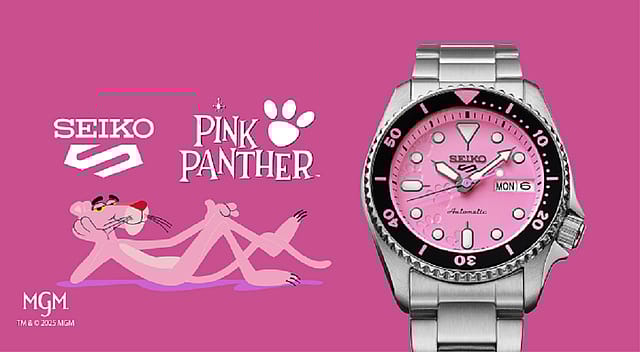
Japanese watchmaker Seiko is signalling a sharper push into India with its first Mumbai flagship boutique. The new 900-sq-ft standalone store on Linking Road brings together Seiko’s key collections—King Seiko, Prospex, Presage, Astron and Seiko 5 Sports—under a single, brand-owned retail format.
The move reflects a broader shift among global watch brands towards tighter control over distribution and storytelling, as Indian consumers increasingly trade up from mass-market watches to premium and “affordable luxury” timepieces. With the expansion, Seiko eyes a larger pie of one of the fastest-growing global markets.
The company has clocked a compound annual growth rate (CAGR) of around 55% over the past four years, a figure cited by Seiko, reflecting post-Covid acceleration in discretionary and premium consumption.
“Seiko is one of the oldest watchmakers in the world. 1881 is when we started, so it is more than 145 years old. If you look at even Rolex, that’s 1905, so we are older than Rolex,” said Niladri Mazumder, President & COO, Seiko Watch India, at the launch. “I’m not comparing brands here, but we have a lot of heritage, and Japanese watchmaking—the essence of Japan—is very well reflected in our products.”
Mazumder positioned Seiko as a rare non-Swiss challenger in global watchmaking. “The Swiss are great watchmakers, no doubt about that, but the only brand which has given the Swiss any competition across the world has been Seiko over the years. If you look at Watches and Wonders in Geneva, we are the only ones who have a booth alongside the Swiss,” he said.
Watches and Wonders Geneva is the world’s most influential luxury watch trade fair, dominated by Swiss maisons and closely watched by collectors, retailers, and industry insiders globally.
India climbs Seiko’s global ranks
Globally, Seiko operates across more than 120 countries, with 15 national offices managing regional businesses. India’s standing within this network has changed sharply.
“Pre-Covid, out of the 15 national offices—which also includes the Indian subcontinent of Sri Lanka, Bangladesh, Nepal and Maldives—we were around the 14th largest,” Mazumder said. “When the Russia-Ukraine conflict happened, we became 13th by default. But in the last four years, growth has been stupendous."
Today, India is among Seiko’s fastest-growing markets globally and is on track to become its fourth-largest worldwide, after Japan, the U.S. and Australia—supported by post-Covid premiumisation, rising demand beyond metros, and a sharper push towards brand-led retail as more Indian consumers trade up to affordable luxury watches.
“We will beat Britain, which also handles parts of Africa, and next year we hope we can beat Australia and become the third-largest Seiko market in the world,” Mazumder added.
Despite that rapid rise, Seiko’s scale in India remains modest in the context of the overall market. The Indian watch market—spanning mass, premium and luxury segments—is estimated at $4–4.5 billion annually, based on industry assessments by market research firms.
Seiko’s India business translates to well under 1% market share by value, underscoring both the headroom and the competitive pressure.
Crowded field, strong incumbents
The competitive landscape is intense. Titan Company dominates the domestic market, with its watches and wearables business generating several thousand crore rupees in annual revenue, supported by brands such as Titan, Fastrack and Sonata, and retail formats including Helios.
On the imported side, Seiko competes with Swiss brands such as Tissot, Longines and Rado, all of which have strong visibility in premium malls and multi-brand watch chains. Specialist retailers like Ethos Watches and Helios further intensify competition by placing rival brands side by side.
Seiko’s response has been to invest in brand-controlled spaces. Alongside the Bandra flagship, the company recently opened a Grand Seiko Salon at Palladium Mall in Mumbai, targeting the higher end of the luxury spectrum. More Seiko boutiques are planned in Mumbai and other metros.
The Bandra flagship is therefore less about immediate volumes and more about long-term positioning. Whether that strategy helps Seiko convert its rapid growth into meaningful market share gains will depend on how effectively it balances exclusivity with scale in a market dominated by powerful domestic incumbents and deeply entrenched Swiss names.
For now, Seiko is clear about the direction of travel. As Mazumder put it, “India is no longer a peripheral market for us. It is central to our global growth story.”