
Sebi exploring quicker 'lodge and launch' framework for AIFs, to speed up scheme approvals
ADVERTISEMENT
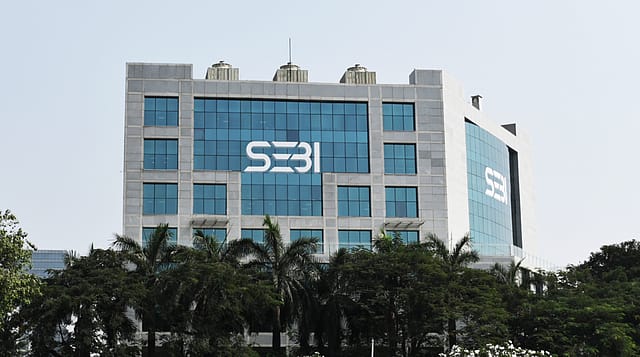
The Securities and Exchange Board of India Tuhin Kanta Pandey on Wednesday said that the regulator is exploring a “lodge and launch” framework for alternative investment funds (AIFs). This could enable faster scheme approvals by relying on merchant banker due-diligence certificates, Pandey said.
The aim is to speed up fund launches and improving ease of doing business for the AIF industry, while maintaining governance standards.
“We are exploring the lodge launch model for AIFs. For certain AIF schemes, reliance can be placed on due diligence certificates from merchant bankers,” Pandey said at the industry IVCA event.
“For AI-only schemes, the AIF managers shall bear responsibility for disclosure due diligence. This framework can improve ease of doing business, accelerate fund launches, and support faster mobilisation of private capital,” he said.
AIFs can build sectors which can strengthen India’s economic growth: Pandey
Pandey warned that the current geo-political situation is a reminder that capital must do more than chase returns. "It must also build resilience. Alternative Investment Funds (AIFs) can build sectors which can strengthen India’s economic growth – renewables, storage logistics, strategic manufacturing and supply chain capacity."
Disclosing growth data, India has more than 1,700 registered AIFs. As of December 2025, commitments stood at ₹15.3 lakh crore and investments at ₹lakh crore, with a CAGR of near 30% in the last five years, Pandey said.
“While they are creating growth, they are also creating room for entrepreneurship, infrastructure and enterprise expansion. To sustain India’s growth, the economy will need bank finance, public markets and well governed pools of alternative capital," he said.
Pandey said that “mis-selling of products” was one of the key challenges. “AIFs are meant for sophisticated investors. The protection of higher returns cannot be separated from the disclosure of higher risks,” he said.
The second factor is whether enough capital is going towards growth and innovation. “AIFs are expected to fund uncertainty, innovation and early stage enterprise,” Pandey said.
How much has gone towards start-ups
But as of December 31, 2025, only ₹205 billion has gone towards start-ups. The industry can do much more to back innovation-led sectors and emerging businesses.
Pandey said Sebi’s regulatory approach towards AIFs has been balanced, strengthen governance where required and flexibility where justified.
Sebi recently simplified reporting requirements for comprehensive annual activity report can rationalise e-filings and reduce compliance burden.
“Ease of doing business and regulation are not opposing goals. They must go together. Growth must be accompanied by standards, which is non negotiable,” Pandey said.
Accredited investors have risen to 2,181 in February 2026, from 649 in May 2025.
“Going ahead we are exploring ways to leverage public infrastructure, to further streamline the process of accreditation,” Pandey said.