
Unlocking welfare: Making public schemes more accessible to the gig economy
ADVERTISEMENT
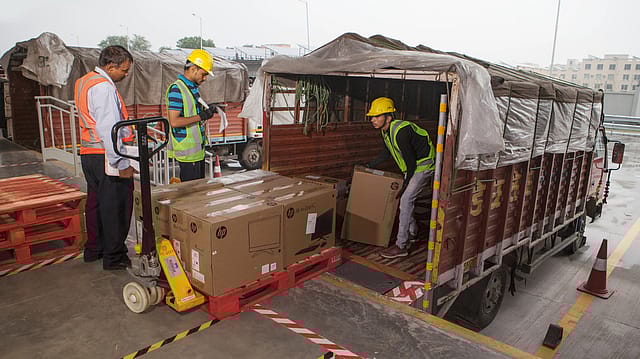
India’s gig economy is a fast-growing part of the country’s broader digital ecosystem growth story. From food delivery and quick commerce to ride-sharing, platform workers support on-demand services that underpin everyday urban life.
The Economic Survey 2025-26 notes that the gig economy, encompassing delivery, ridesharing, and freelancing, has seen structural growth, transitioning informal earning opportunities into platform-ecosystem-integrated roles. Now representing over 2% of India's total workforce, the growth of gig workers outpaces overall employment. Non-agricultural gig roles are projected to constitute 6.7% of the workforce by 2029-30 and contribute ₹2.35 lakh crore to GDP.
As this segment expands, the conversation around social security continues to deepen. Efforts to strengthen welfare and security for gig workers, including initiatives such as Code on Social Security (2020) and the e-Shram portal, among others, have been underway for several years.
Many gig workers are eligible for multiple central and state schemes based on their socio-economic profiles. However, awareness of these schemes and clarity on eligibility, documentation, and application processes remain limited. For workers whose time directly translates to earnings, navigating administrative systems can be both complex and costly.
Unlike traditional employer-employee relationships, gig work is characterised by flexibility and mobility. For instance, delivery partners associated with food delivery and quick commerce platforms often move across platforms depending on their needs and preferences, which makes long-term, employer-linked benefits harder to anchor. In such a system, access to portable, government-backed welfare becomes especially relevant. The challenge, therefore, lies not just in the availability of benefits but in ensuring they are discoverable, understandable, and easy to access.
Building on this, platforms have, for some time now, offered forms of social security support such as medical insurance and scholarships for delivery partners’ children, helping extend financial security to their families’ health and education needs.
In parallel, Haqdarshak, a tech platform that helps citizens, particularly in underserved communities, access government welfare schemes and financial services, has been working closely with platforms like Zomato and Blinkit to organise government scheme facilitation camps for delivery partners across the country. These localised camps have facilitated access to multiple central and state government welfare schemes, unlocking entitlements worth more than ₹200 crore.
At these camps, platform workers have shown strong interest in schemes such as Pradhan Mantri Jan Arogya Yojana (health insurance), ration cards, e-Shram (centralised database of unorganised workers), Pradhan Mantri Jeevan Jyoti Bima Yojana (life insurance), Pradhan Mantri Suraksha Bima Yojana (personal accident insurance), and National Pension Scheme for retirement savings. A growing number of platform workers are also opting for multiple coverages, combining health, personal accident, and life insurance, reflecting an increasing preference for layered social protection.
The ₹200 crore in unlocked entitlements is not just a number. It reflects what becomes possible when initiatives and schemes are brought closer to the people who need them most. As the gig economy continues to grow, efforts of this kind will need to be sustained and scaled. Our vision is that delivery partners or driver partners never need to choose between a day's earnings and securing their family's future, because the information and access they need to government schemes is available through trusted, online, and on-ground channels.
That is what inclusive growth looks like in practice.
(Kumar is chief sustainability officer, Eternal; Doegar is CEO & Founder, Haqdarshak. Views are personal.)