
What is Gemini Spark, Google’s new “24/7” AI assistant?
ADVERTISEMENT
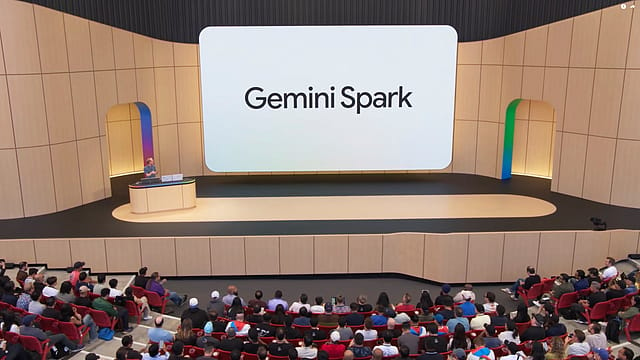
Google is betting that the next phase of artificial intelligence will move beyond chatbots and into something far more embedded in everyday digital life. With Gemini Spark, unveiled as part of its Gemini roadmap at the Google I/O event that happened yesterday, the company is introducing what it calls a “24/7 personal AI agent”. It is a system designed to continuously work in the background, track tasks and assist users across Google’s ecosystem, even when they are offline.
Unlike a conventional AI chatbot that responds only when prompted, Spark is being pitched as an assistant that can stay active over long periods of time. Users can ask it to monitor emails, summarise updates, organise schedules or track specific goals, while the system continues working independently in the cloud.
So, how is Spark different from a normal AI assistant?
Most AI assistants today operate like search engines with conversational interfaces, with a user asking a question, getting a response and again starting over. Spark, by contrast, is designed to handle ongoing responsibilities in the background. Or like Google’s CEO Sundar Pichai says, “You can shut your laptops, and it will still work.”
In examples shared by Google, Spark could review a user’s inbox every Monday morning, prepare summaries of important emails and automatically block time on the calendar for focused work. Another demonstration showed the assistant tracking internship applications and surfacing relevant updates without repeated prompts.
Google Labs’ Josh Woodward, VP of the Gemini App and AI Studio, during the presentation said, “Need to send an email to your boss with a status update? Spark can pull all the facts from your emails, your docs, your sheets, and slides and write the draft for you. Small businesses are using Spark. They can watch over their inbox, so they never miss a question from a customer.”
When will Spark be made available to users?
Google is still testing Spark, and is expected to be made available to Google AI Ultra subscribers next week.
Why are people comparing Spark to OpenClaw?
Because both products are chasing the same idea—an always-running AI agent.
OpenClaw drew attention earlier this year with its vision of an AI assistant capable of autonomously handling digital workflows across apps and devices. Google’s Spark enters that same territory, though with a major advantage, it has direct integration into products like Gmail, Docs, and Calendar to name a few, already used by billions of people.
Why does Gmail integration matter?
For Google, Gmail is the foundation of the product, as many users already store years of communication, schedules and documents within Google’s ecosystem. Spark is designed to use that information, with user permission, to deliver more contextual assistance.
That could include drafting replies, identifying important messages, tracking recurring commitments or surfacing reminders based on previous interactions. Instead of functioning like a separate chatbot window, Spark is being positioned as an assistant woven directly into a user’s existing digital workflow.
At the same time, that level of integration is likely to intensify concerns around privacy and data access, especially as AI systems become more autonomous.
What bigger shift does Gemini Spark point to?
Spark reflects a broader shift underway across the AI industry, as competition is no longer just about building smarter chatbots. Companies are now racing to create software agents capable of carrying out tasks, managing information and operating with minimal supervision.
For Google, Spark appears to be an attempt to ensure Gemini becomes more than just a conversational AI product and become an agentic product. The company is positioning it as on operating layer that sits across email, calendars, tasks and eventually devices, attempting to move AI closer to the role of a full-time digital assistant rather than a tool used only when needed.