
Ceasefire hopes dented as U.S.–Iran talks collapse after 21 hours
ADVERTISEMENT
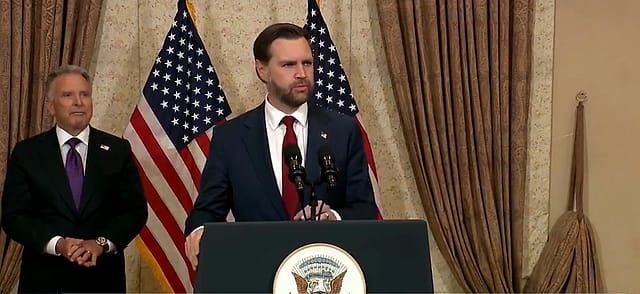
High-stakes talks between the United States and Iran ended without a breakthrough after nearly 21 hours of negotiations in Islamabad, raising fresh concerns over a renewed escalation in West Asia and casting uncertainty over a fragile ceasefire.
The discussions, aimed at extending a temporary truce and easing tensions in the region, failed to resolve key differences, particularly around Iran’s nuclear programme and broader strategic demands.
Vance: ‘We have not reached an agreement’
Confirming the breakdown, US Vice President JD Vance said the talks were substantive but ultimately inconclusive.
“We’ve had a number of substantive discussions… the bad news is that we have not reached an agreement,” Vance said after the meeting.
He reiterated Washington’s core demand for a clear commitment from Iran on its nuclear ambitions.
“We need to see an affirmative commitment that they will not seek a nuclear weapon, and they will not seek the tools that would enable them to quickly achieve a nuclear weapon. That is the core goal of the president of the United States, and that's what we've tried to achieve through these negotiations."
US officials indicated that Iran’s refusal to provide firm assurances remained the central sticking point in the negotiations.
Tehran rejects terms, calls them ‘unlawful’
Iranian officials pushed back strongly on the US position, describing Washington’s demands as excessive.
The country’s foreign ministry said any agreement would depend on the US avoiding what it called “excessive demands and unlawful requests”
The Islamic Revolutionary Guard Corps has remained firm on preserving its leverage in the region, including control over critical routes such as the Strait of Hormuz.
Narrative battle spills onto social media
Even as formal talks collapsed, the messaging war between the two sides played out publicly.
In a post on X, Iran’s embassy in Ghana said Tehran had given a “big no” to US demands, adding that Washington was seeking concessions it “couldn’t achieve through war,” and that the US delegation had left without securing any agreement.
The post also claimed the Strait of Hormuz remained under Iran’s control and described the outcome as a reaffirmation of Tehran’s position.
Ceasefire fragile, risks return
The collapse of talks puts the recently announced two-week ceasefire at risk and raises the possibility of renewed tensions in the region.
For markets and policymakers, the shift is major. The optimism that drove last week’s rally in risk assets was built on expectations of de-escalation. With talks now failing, attention is likely to shift back to crude oil prices, shipping routes, and broader geopolitical risk.
While both sides have not ruled out further engagement, there is no immediate clarity on when talks may resume.
For now, the outcome marks a shift from cautious optimism to renewed uncertainty, with the geopolitical narrative once again taking centre stage in global markets.