
Trump claims Khamenei killed in US-Israel strikes; Tehran officials report family casualties
ADVERTISEMENT
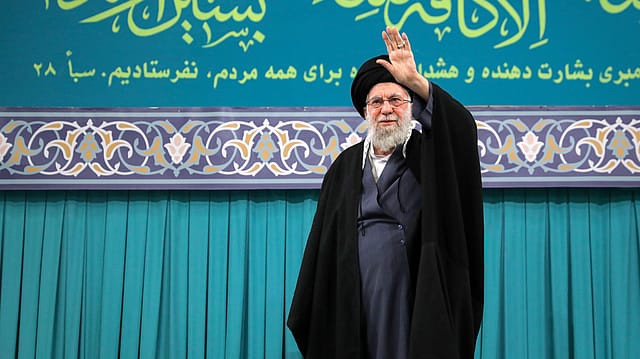
US President Donald Trump has claimed that Iran’s Supreme Leader Ali Khamenei was killed in joint US-Israel military strikes targeting senior Iranian leadership.
Speaking late Saturday, Trump declared that Khamenei was “eliminated” as part of what he described as a decisive operation against Iran’s command structure. He said multiple senior decision-makers were killed and suggested the strikes were the result of precise intelligence tracking. Israeli officials echoed the assertion, stating there were “strong indications” that Khamenei had been killed, though they stopped short of presenting definitive proof.
However, Iranian authorities have not confirmed the claim. State-aligned media outlets in Tehran reported that the Supreme Leader remained alive and continued to direct the country’s response. No official visual or audio message from Khamenei has been released since the strikes, adding to the uncertainty and competing narratives.
Reports of family members killed
Fuelling the confusion, a member of the Tehran City Council was quoted by local media as saying that Khamenei’s son-in-law and daughter-in-law were killed in the strikes. Subsequent Iranian reports suggested additional relatives — including a daughter and a grandchild — may also have died in the bombardment.
These claims have not been independently verified by international agencies. Western governments have also not formally confirmed the reported deaths of Khamenei’s family members.
The absence of conclusive evidence from either side has left the international community navigating conflicting statements in real time — a common feature in high-intensity conflicts involving senior leadership targets.
Regional and global fallout
The claims come amid sustained missile and drone exchanges between Iran and US-aligned targets across the Gulf. Several regional capitals have reported air-defence activity in recent days, and multiple countries have issued travel advisories or temporarily restricted airspace.
If confirmed, Khamenei’s death would represent the most important decapitation strike in Iran’s post-revolution history and could trigger a profound political and security vacuum within the Islamic Republic. Analysts warn such a development could dramatically widen the conflict, drawing in regional proxies and escalating direct confrontation between Tehran, Washington and Tel Aviv.
For now, the situation remains fluid. With no independent verification and sharply divergent official statements, the status of Iran’s Supreme Leader remains one of the most consequential unanswered questions in an already volatile regional crisis.