
Indian aviation faces ₹18,000 crore loss in FY26 as fuel surge, weak rupee trigger ‘Negative’ outlook: ICRA
ADVERTISEMENT
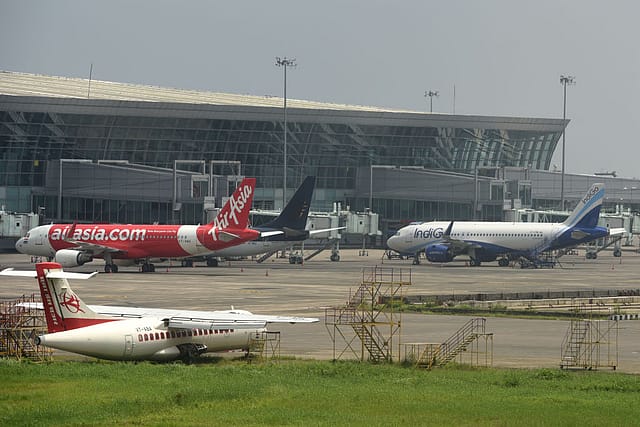
India’s aviation industry is headed for deeper financial turbulence, with losses expected to widen to ₹17,000–18,000 crore in FY2026, as rising fuel costs and currency depreciation sharply erode airline profitability, according to a report by ICRA Limited.
The rating agency has revised its outlook on the sector to “negative” from stable, citing disruptions triggered by the ongoing West Asia conflict, which has pushed up crude oil prices and weakened the rupee, significantly inflating operating costs for carriers.
Fuel, forex shocks to hit earnings
A sharp spike in aviation turbine fuel (ATF) prices—up 5.7% sequentially in March 2026—along with Brent crude surging to $105 per barrel from $72 in late February, is expected to intensify cost pressures. Fuel alone accounts for 30–40% of airlines’ operating expenses, while a significant portion of costs, including leases and maintenance, is dollar-denominated.
The rupee’s depreciation has compounded the stress, increasing foreign exchange losses for airlines already grappling with thin margins. As a result, industry interest coverage is projected to weaken to 0.7–0.9 times in FY2026, down from 1.8 times in FY2025.
Traffic growth remains muted
Domestic passenger traffic growth is expected to remain subdued at 0–3% in FY2026, reaching 165–170 million passengers, reflecting a sharp slowdown from previous years. For the first 11 months of FY2026, domestic traffic rose just 1.6% year-on-year.
International traffic has been relatively stronger, with growth estimated at 7–9% for FY2026, although this too faces risks from flight disruptions and rising fares.
ICRA had earlier projected a recovery in FY2027, with losses narrowing to ₹11,000–12,000 crore on the back of improved traffic. However, the escalation in geopolitical tensions has introduced a downside risk to these estimates, with higher fares—driven by fuel surcharges of 5–6%—potentially dampening demand.
Capacity constraints add pressure
Operational challenges continue to weigh on the sector. Around 117 aircraft, or 13–15% of the total fleet, remained grounded as of February 2026 due to engine failures and supply chain disruptions, particularly involving Pratt & Whitney engines.
These issues have led to higher lease costs, increased reliance on older aircraft, and reduced fuel efficiency, further straining airline balance sheets.
Despite these headwinds, passenger load factors remain robust at around 93%, indicating resilient underlying demand. However, the benefits of high occupancy are being offset by rising costs and operational inefficiencies.