
Hindalco vs Vedanta: Battle for aluminium supremacy heats up
ADVERTISEMENT
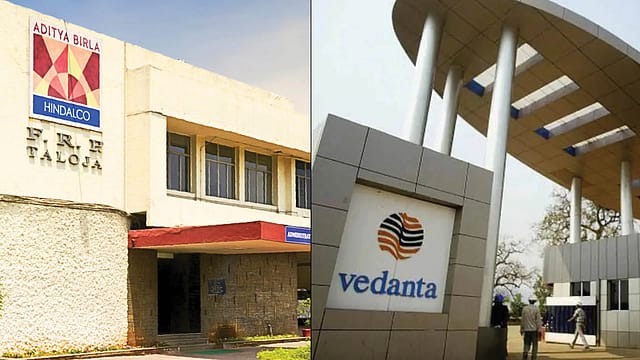
India’s rapidly expanding aluminium sector is witnessing a high-stakes contest between two industry heavyweights—Kumar Mangalam Birla-controlled Hindalco Industries and Anil Agarwal’s Vedanta Aluminium . As demand for the metal surges across sectors ranging from electric vehicles to renewable energy, both companies are racing to secure dominance.
Rising global aluminium prices, steady domestic consumption, and supportive policy measures have intensified the rivalry. What began as a race to scale up capacity is now evolving into a broader contest over cost efficiency, product mix, and control over the value chain. Both groups are committing billions of rupees to expansion, signalling a prolonged battle for leadership.
Aluminium prices have been rising, driven by strong demand from infrastructure projects, power transmission networks, electric vehicles, and solar equipment. Global market disruptions, including geopolitical tensions and wars, have also pushed prices upward. Investors appear to be responding to these trends. Hindalco’s share price has risen nearly 30% over the past six months, while shares of Vedanta Ltd, the parent company of Vedanta Aluminium, have climbed about 66% during the same period.
Domestic demand for non-ferrous metals is projected to grow sharply in the coming decade. Consumption is expected to reach 8.2 million tonnes (MT) by FY30 and 11.5 MT by FY35, up from around 5.5 MT in FY25. Electrification, urban expansion, and a push for domestic manufacturing are expected to drive this growth. The government’s India Aluminium Vision blueprint also underlines the metal’s importance in achieving energy transition targets and expanding its use in emerging applications.
Hindalco’s recent performance reflects these favourable industry trends. The company reported consolidated EBITDA of ₹8,543 crore in the third quarter, up 5% year-on-year, while profit before exceptional items rose 8% to ₹4,051 crore. Of the total EBITDA, the company’s Indian aluminium upstream business alone contributed ₹4,832 crore, marking a 14% increase driven by higher volumes and improved realisations.
Its US-based subsidiary, Novelis, contributed around ₹3,370 crore to EBITDA. However, the company had earlier disclosed fire incidents at Novelis’ Oswego plant in October last year, which were estimated to have a free cash flow impact of $1.3–1.6 billion. The better performance came despite the incident.
Managing Director Satish Pai has indicated that the company is entering a fresh phase of upstream expansion. Hindalco plans to invest about ₹35,000 crore, including ₹21,000 crore in Odisha for a 3.6-lakh-tonne-per-annum smelter expansion at its Aditya Aluminium complex in Sambalpur and a battery-grade aluminium foil facility. The investment cycle is expected to run until FY30.
“Our goal is to balance upstream and downstream—if we produce 2 MT of aluminium, we want 1.5 MT of downstream capacity. That stabilises earnings and improves valuation,” Pai said earlier.
Vedanta Aluminium, which commands roughly half of India’s primary aluminium market, is countering with a strategy built on scale and cost efficiency. The company is ramping up production and strengthening its raw material security by operationalising captive mines. Aluminium has increasingly become a critical input for infrastructure, automotive, aerospace, power transmission, and clean energy equipment, reinforcing the company’s expansion push.
Most of Vedanta Aluminium’s announced capital expenditure of about ₹27,700 crore has already been deployed, and the company says it is now entering the returns phase of its investment cycle. “As incremental volumes come on stream and value-added sales rise, the company expects improved operating leverage, stronger cash flows, and better returns on capital,” the company said recently.
Vedanta is also developing a massive ₹1.3 lakh crore greenfield aluminium project in Dhenkanal, Odisha. The project includes a 3 million tonne-per-annum smelter and a 4,900 MW captive power plant. In addition, the company is expanding Bharat Aluminium Company by adding 435,000 tonnes of capacity to reach one million tonnes.
The group is also moving ahead with plans to demerge Vedanta Aluminium and list the entity separately on stock exchanges, aiming to unlock value from the booming aluminium business.
Operationally, Vedanta reported its highest-ever quarterly aluminium production of 620,000 tonnes in the third quarter, up 1% year-on-year. Alumina output rose sharply by 57% to a record 794,000 tonnes during the same period. Vedanta Ltd, which also has a strong zinc business, delivered exceptional financial performance, with profit after tax jumping 60% to ₹7,807 crore in Q3. The company reported a record quarterly EBITDA of ₹15,171 crore, up 34% YoY, supported by margin expansion.
The company is also shifting its focus toward higher-value products such as billets, rolled products, and alloys, as well as low-carbon aluminium for sectors like electric vehicles, aerospace, and clean technology. Vedanta aims to derive more than 90% of its sales from such value-added products.
The rivalry between Hindalco and Vedanta reflects two distinct strategic approaches. Hindalco is emphasising balanced growth and stronger downstream integration, while Vedanta is doubling down on scale, cost leadership, and tighter control over the entire value chain.
However, both companies are riding the same powerful demand wave. Aluminium is becoming central to decarbonisation efforts, lightweight transport solutions, and the expansion of power grids. Even if global markets fluctuate, domestic demand for the metal is expected to grow at 6–8% annually in the coming years—ensuring that the contest between these two giants continues to intensify.