
How the West Asia war has derailed local brands’ growth story
ADVERTISEMENT
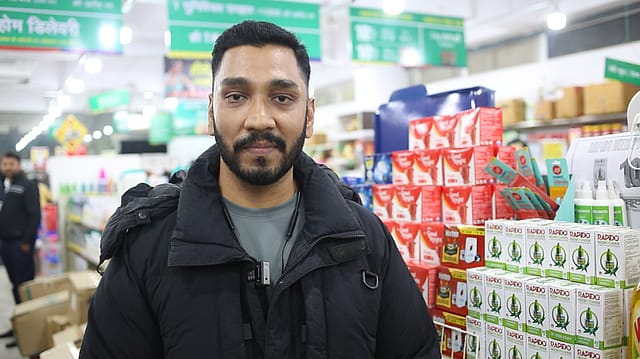
Sachin Bhatt, a Varanasi-based entrepreneur, makes mosquito vapourisers. He claims his brand, Rapido, contains herbal oils and is hence healthier than the vapourisers made by market leaders Goodknight or Mortein. Priced at ₹70, significantly lesser than competition (priced around ₹100), Rapido had made its mark in towns across Eastern UP with its competitive pricing and its positioning of being an herbal mosquito vapouriser brand. Bhatt says that the past year was particularly good for his brand with demand growing by 10%-15%.
Everything seemed picture perfect until the West Asia war broke out on February 28. An important ingredient of Rapido Vapouriser is a solvent called D-80, a by-product of crude oil. It is a base in which all its herbal ingredients and fragrances are dissolved. Within a week of the outbreak of the war, D-80 prices went up by 2%-3%, and has thereafter escalated by 40%. “D-80 is no longer available,” says Bhatt. “There are suppliers who have a few barrels left and are pushing us to buy them. There is no guarantee of replenishment.”
A 220-litre barrel of D-80 costs ₹23,000, making it extremely difficult for Bhat to sustain. On top of that, packaging costs have gone up by 15% with polymer prices hitting the roof. Bhatt says he has used all his capital buying D-80 and the only way he can sustain is by increasing prices by at least 20%. That’s not an option either. “None of the national brands have increased prices, and if we do so we will lose consumers.”
Bhatt has raw materials stock for the next two months. However, if the war continues, his business would be staring at closure. His situation is not unique. Businesses across tier 2-3 India are on the brink of closure. Indore (Madhya Pradesh), has around 35 detergent manufacturers and 85% of them have shut down in the past month because they have run out of raw materials. Small enterprises across the country are on the brink of closure due to war-related disruption.
Indore-based Goutam Sarkar, who owns detergent brand Ranisa, gives stiff competition to brands such as HUL’s Wheel and Ghadi in Madhya Pradesh and Rajasthan. “I have stock to survive only till April 10. If crude supply doesn’t stabilise by then, I will have to stop production,” he says. The detergent industry is also dependent on crude by-product, LABSA. “The prices of LABSA have shot up from ₹120 to ₹300 per kg and is no longer available. I bought it for ₹237 per kg a week ago.”
With cost of plastic increasing Sarkar’s packaging costs have also gone up, leaving him with no choice but to increases prices. A 1 kg pack of Ranisa has increased from ₹40 to ₹48. Despite the price hike, Ranisa continues to be substantially lower than a 1 kg pack of Wheel which is priced at ₹76. “Price competitiveness doesn’t matter when we don’t have the ingredients to manufacture,” cribs Sarkar. He says the shortage of LABSA has got aggravated because the bigger manufacturers have bought bulk of the stock at a huge premium.

For Vivek Jaiswal, who sells whole spices under the brand name, Mother Choice, in Eastern UP, it is packaging costs that have hit the roof. In order to maintain freshness, Jaiswal invests in vacuum packaging, the cost of which he says has increased by 25% in the past month. “Demand had gone up by 25%, but high packaging costs are a dampener. I have cut down trade discounts by 5%-10%, but if the war doesn’t end, I will be forced to increase prices.”
Jaiswal is also seeing a dip in consumption. He says that with LPG becoming scarce, a lot of consumers in and around Varanasi and Prayagraj have started cooking on coal. “People are buying less, because they are not used to cooking on coal. They are buying only what is essential.”
Barely a month ago these entrepreneurs were growing robustly, challenging their national peers. The war has put them on the backfoot, but they are resilient. “The moment the war stops everything will get normal within 25 days,” says an optimistic Bhatt.