
Snapchat bets on Gen Z cricket frenzy with ‘Cricket in a Snap’ ad suite
ADVERTISEMENT
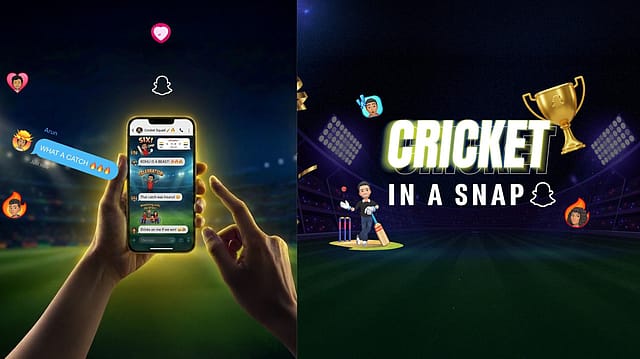
As brands prepare for the marketing frenzy around the Indian Premier League, Snap Inc. is rolling out a new advertising proposition aimed at capturing the real-time conversations that surround the tournament. The company has introduced ‘Cricket in a Snap’, a cricket-season advertising offering designed to help brands engage young audiences during one of India’s biggest cultural moments.
The initiative underscores Snapchat’s growing focus on Gen Z users, who now form the platform’s core audience in India. According to Snap, the app’s user base in the country has expanded from about 100 million a few years ago to over 250 million users, with nearly 90% of them aged between 13 and 34.
Cricket, the company says, already drives significant organic engagement on the platform. Internal data shows that 85% of Gen Z in India follow the IPL, while nearly three in four Snapchatters tune into sports multiple times a week.
From passive viewing to real-time participation
Snap’s pitch to advertisers hinges on a behavioural shift in how young audiences experience live sports. While fans continue to watch matches on television or streaming platforms, they are simultaneously reacting to them on their phones.
According to the company, over 90% of Snapchat users second-screen during live cricket matches, often messaging friends or sharing quick reactions while watching the game.
“Cricket in India has reached a tipping point. The TV broadcast is increasingly the backdrop to a far more intense ‘lean-forward’ experience happening on the phone,” said Yagnesh Ravi, Ad Solutions Lead at Snap India.
Ravi said that while the broadcast delivers the spectacle, the conversation around the match now happens in real time across messaging and social platforms. Snapchat’s strategy is to place brands inside those conversations rather than interrupt them with conventional ads.
New ad formats built around AR and creators
To do that, Snap is introducing a range of interactive formats built around augmented reality (AR), creators, and live match data.
Among the formats is a Live Sports API that integrates real-time score updates into branded AR lenses, allowing users to see match scores while interacting with the camera. The company is also introducing AR Fan Zones, which recreate experiences such as locker rooms or practice nets within Snapchat’s AR environment.
Other formats include Surface Tracking, which allows branded lenses to be anchored to real-world surfaces, effectively turning them into virtual cricket pitches, and AR Bar branded lenses, which appear within Snapchat’s AR discovery section where users browse trending lenses.
Snap is also rolling out post-capture stickers and frames, enabling brands to appear when users decorate photos or videos after capturing them.
In addition, advertisers can partner with Snapchat creators, known as Snap Stars, to launch hashtag-driven campaigns designed to spark user participation during matches.
Building a cricket content ecosystem
The company is also expanding cricket-related content on the platform through partnerships with teams and sports media publishers.
Official team content from franchises such as Mumbai Indians, Chennai Super Kings, Punjab Kings, Delhi Capitals, and Gujarat Titans will appear alongside analysis and behind-the-scenes content from sports broadcasters and publishers such as JioStar, CricTracker, and Sportsyaari.
Snap is also betting on fan-driven participation. Through Spotlight challenges such as #Paltan2026 and #Yellove, users can share match rituals, celebrations, and team support, often amplified by AR lenses that allow fans to virtually “wear” their team colours.
A broader play around cultural moments
While cricket remains the immediate focus, Snap sees the initiative as part of a broader effort to tap into cultural moments that drive spikes in engagement on the platform.
The company says the product suite developed for ‘Cricket in a Snap’—including AR integrations, creator collaborations, and live data features—could potentially extend to other sports or large-scale events in the future.
For now, however, with the IPL season approaching, Snapchat is positioning itself as the “digital stadium” for Gen Z, where the game is not just watched but constantly discussed, shared, and recreated in real time.