
Uber invests millions annually in India’s safety ecosystem; rolls out Record My Ride and ambulance assistance
ADVERTISEMENT
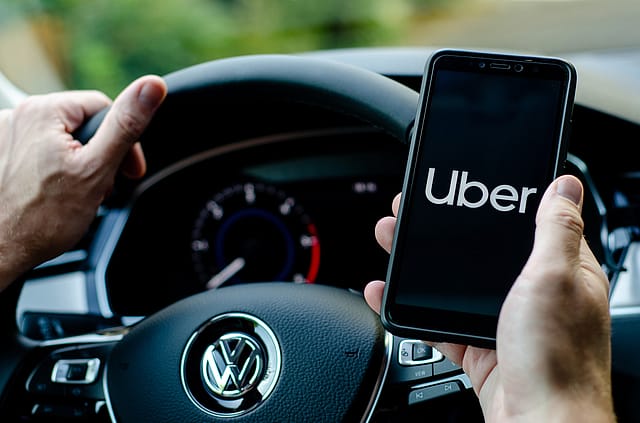
Uber is investing millions of dollars every year in safety in India as it rolls out a fresh set of safety features, including in app video recording, ambulance assistance and customised trip verification PINs, in a bid to raise safety standards across the country's ride hailing industry.
"We have never publicly disclosed the exact number, but it's millions of dollars (of investment in safety) annually," Sooraj Nair, head of Safety Operations for Uber India and South Asia told Fortune India. "Safety is a core value. We don't do this because it gives us a business advantage. We do this because it's the right thing to do."
The company is reiterating its push to make safety standards an industry benchmark rather than a competitive differentiator. It also reaffirmed its partnership with the Ministry of Road Transport and Highways as India continues to grapple with one of the world's highest road accident rates.
Nair said Uber deliberately avoids measuring safety investments against business metrics. "If we dial up safety, will it lead to X percent improvement in trips? That's a very short-term view. People place their trust in us to transport them safely from point A to point B, and we want to live up to that trust," he added.
Near the end of last year, Uber's Dutch parent, Uber B.V., infused nearly ₹3,000 crore (about $330 million) into Uber India Systems Pvt Ltd through two capital injections, ₹200 crore in November 2025 and ₹2,721 crore in January 2026.
The event was also attended by Nitin Gadkari, minister of Road Transport and Highways of India, as chief guest, who highlighted that the country records around 5 lakh road accidents and 1.8 lakh deaths every year, causing an economic loss equivalent to 3% of GDP.
About 66% of fatalities are among people aged 18 to 34, while overspeeding alone accounts for around 1.2 lakh deaths annually. Gadkari also noted that India's cab industry is expected to grow from ₹36,000 crore in 2024 to ₹60,000 crore over the next five years, making road safety even more critical.
He urged companies such as Uber to support behavioural change campaigns, including the ministry's "Jaldi Mat Machao, Aaraam Se Aao" initiative.
India specific innovations take centre stage
Among the new launches is Record My Ride, an industry first feature that allows drivers to securely record encrypted in-cab video using their own smartphones during trips. The company has also partnered with medical logistics provider Dial 4242 to integrate Ambulance Assistance directly into the Uber platform for emergency situations.
Uber also introduced Don't Type & Drive, which disables manual typing in the driver app while the vehicle is moving and prompts drivers to pull over before responding to messages. Another feature, Set Your Own PIN, allows riders to create and manage their own trip verification PINs instead of relying on system generated codes.
Nair said several safety innovations have either originated in India or have been customised for local needs. Record My Ride, initially built for India because of relatively low dashcam penetration, is now being rolled out globally. Earlier versions of RideCheck, which detects route deviations and unexpected stops, also originated in India before evolving into a global product.
"Every geography has its own unique safety challenges," Nair said. "In India, people expect to speak to a human during a safety incident, so we invest in phone support instead of relying entirely on AI. We also invest in gender sensitisation programmes because that's the reality of our market." He added that drivers undergoing repeated training show noticeably fewer complaints over time.
Addressing the event, Uber India President Prabhjeet Singh, who will assume the role of managing director for OpenAI India in September, said safety "has no finish line" and should become the norm across the ride hailing industry.
"What starts as innovation soon becomes the standard everyone expects," Singh said. "Our role is not just to raise the bar on our platform, but to be a catalyst for everyone else in the industry. We would rather have the whole industry become safer together so that more people choose shared mobility over private vehicles."
It is equally important for us to be thinking about safety for consumers and safety for earners. At Uber, we have continuously responded to these expectations with new innovation and investments, he added.
According to Uber's consolidated financial statements for FY25, net revenue from ride hailing declined 89% to ₹88 crore from ₹807 crore a year earlier, despite gross ride hailing revenue remaining almost unchanged at ₹2,604 crore. The company also reported a consolidated loss of ₹1,512 crore in FY25, sharply higher than ₹89 crore in FY24. Across all ride categories (including bikes and three-wheelers), Uber accounts for around 40% of the Indian market.