
Economic Survey 2026: 235 lakh demat accounts added in FY26 till Dec; total crosses 21.6 crore
ADVERTISEMENT
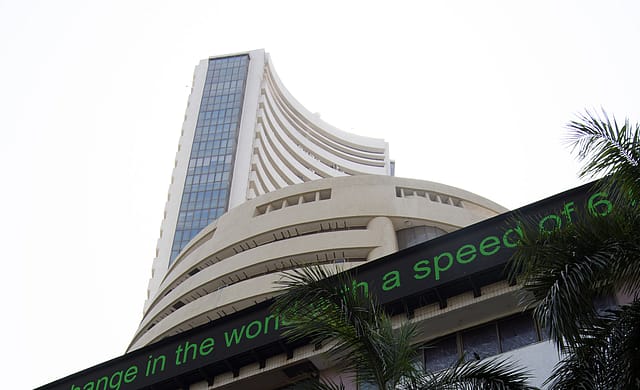
Retail participation in India’s capital markets accelerated sharply in FY26, with 235 lakh demat accounts added till December 2025, taking the total number of accounts beyond 21.6 crore, the Economic Survey 2025-26 said on Thursday.
“A key milestone was the crossing of the 12-crore mark for unique investors in September 2025, with nearly a fourth of them being women,” the Survey noted.
The mutual fund industry also expanded during the period, with 5.9 crore unique investors as of December 2025. Of these, 3.5 crore investors (as of November 2025) were from non-Tier I and Tier II cities, highlighting the deepening penetration of market-linked investments beyond major urban centres.
The Survey pointed out that equity investments, once a peripheral component of household balance sheets, have become an increasingly significant source of financial wealth, supported by broader participation and diversified access channels. While the direct share of individuals in equity markets rose gradually from just under 8% in FY14 to about 9.6% by September 2025, the indirect share nearly tripled over the same period to 9.2%.
Driven by this structural shift, the share of equity and mutual funds in annual household financial savings increased from 2% in FY12 to over 15.2% in FY25. This trend has been accompanied by a steady rise in systematic investment plan (SIP) contributions, with average monthly SIP inflows jumping seven-fold from under ₹4,000 crore in FY17 to over ₹28,000 crore in FY26 (April–November).
The unique investor base expanded sharply in the years following the pandemic, rising from around 3.1 crore in FY20 to over 11 crore by FY25.
Equity markets remained resilient
According to the Survey, India’s equity markets remained resilient in FY26 despite heightened geopolitical tensions and shifting global trade policies, supported by favourable domestic macroeconomic conditions and sustained participation by domestic investors.
Benchmark indices posted double-digit gains, with the Nifty50 rising about 11.1% and the BSE Sensex gaining 10.1% during April–December 2025.
“Amid continuous shifts in trade policies and exacerbated geopolitical uncertainties, India’s equity markets exhibited a phase of measured yet resilient performance,” the Survey said, highlighting the role of supportive policy measures, easing inflation and improving corporate performance in the second quarter of FY26.
The Survey noted that a series of reforms—including personal income tax cuts, GST rationalisation, easing of monetary policy and moderating inflation—helped underpin market sentiment during the year.
India leads in global IPO issuance
The primary markets also remained buoyant, with India leading global IPO issuance during the period. IPO volumes were 20% higher than the same period last year, while funds raised increased by 10%, the Survey noted.
A key feature of FY26 IPO activity was the growing share of Offer for Sale (OFS) components. “A notable feature of IPO activity was the prominence of OFS, reflecting increased monetisation by existing shareholders,” the Survey said.
The report noted that SME listings continued to gain traction, with 217 companies listed on SME platforms in FY26 (up to December), compared with 190 in the year-ago period. Funds mobilised rose to ₹9,635 crore from ₹7,453 crore.
Since inception, over 1,380 companies have been listed on SME platforms of the BSE and the NSE.
“The sustained mobilisation of resources through primary markets and widening participation of emerging enterprises point to the increasing breadth and sophistication of India’s capital markets,” the Survey said.
Regulatory overhaul and investor participation
Highlighting regulatory reforms, the Survey described the Securities Markets Code, 2025, as a landmark step in consolidating securities laws. “For the first time, market infrastructure institutions such as stock exchanges, clearing corporations and depositories have been placed on a clear statutory footing,” it said.
Retail participation continued to expand, with 235 lakh demat accounts added during FY26 (till December), taking the total beyond 21.6 crore. Unique investors crossed 12 crore in September 2025, nearly a quarter of whom were women.
Equity and mutual funds have become a growing component of household financial savings. The share of equity and mutual funds in annual household savings rose from 2% in FY12 to over 15.2% in FY25, while average monthly SIP inflows jumped to over ₹28,000 crore in FY26 (April–November).
Corporate bonds see steady double-digit growth
The Survey said Sebi undertook a “comprehensive suite of initiatives” to strengthen investor protection and operational efficiency. These include mandating a new UPI address structure for registered intermediaries and easing norms for brokers operating in GIFT-IFSC.
India’s corporate bond market also expanded sharply, with outstanding issuances rising from ₹17.5 lakh crore in FY15 to ₹53.6 lakh crore in FY25. In FY26, debt accounted for over 63% of total primary market mobilisation between April and December.
Domestic investors offset FPI swings
Foreign portfolio investment flows remained volatile during FY26, with FPIs turning net sellers of equities in Q2 and Q3. However, domestic institutional investors (DIIs) played a stabilising role. “In the midst of volatile foreign capital flows, DIIs have provided much-needed support to the markets,” the Survey said.
With continued buying, as of 30th September 2025, DII ownership in NSE-listed companies rose to 18.7% as of September 2025, with mutual fund ownership hitting an all-time high of 10.9% in Q2FY26.
The report noted that even though FIIs remain important participants in the Indian capital markets, DIIs, along with retail investors and high-net-worth individuals, have been playing a strong counterbalancing role to the decisions made by FIIs regarding market participation.
GIFT City gains global standing
GIFT City continued to scale up as an international financial hub, with over 1,034 entities registered as of November 2025. It climbed nine places in the Global Financial Centres Index to rank 43 globally.
“As of 30th November 2025, GIFT City has shown a strong growth momentum, with over 1,034 domestic and international entities registered across various categories. Within a year, GIFT City has moved up nine places in the Global Financial Centres Index (GFCI), reaching a rank of 43 out of 120 financial centres.”
Within the fintech specific ranking, GIFT City improved by 10 places, reflecting progress made through a dedicated regulatory framework for fintechs, academic partnerships and innovation centres, the Survey noted.