
India’s bullet train project achieves 55% progress; here's a look at current status ahead of 2027 deadline for first section
ADVERTISEMENT
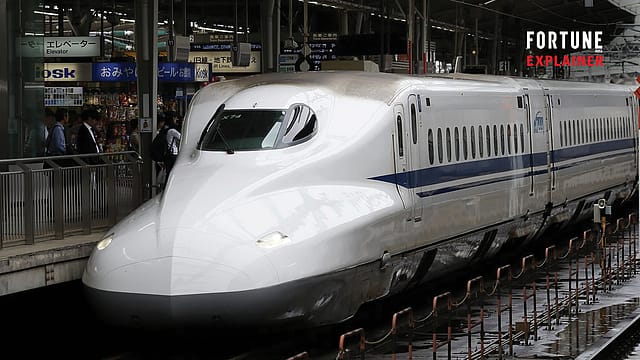
India’s ambition to run a bullet train may become a reality by 2027, as the first section of the Mumbai - Ahmedabad bullet train project may get operational by then, railway minister Ashwini Vaishnaw indicated earlier this week. The project has achieved 55% physical progress, while financial outlays are approaching 70%. The entire 508 km stretch is likely to be complete by 2029.
The project, involving capital cost of nearly Rs two lakh crore, has missed its original completion schedule of 2023 due to several reasons, including hurdles in land acquisition and disruptions caused by the Covid outbreak. Here is an explainer on what the project entails and the current progress.
Country's first bullet train project
The 508-kilometre-long corridor connecting the financial capital Mumbai to Gujarat’s Ahmedabad will be the first bullet train project in the country. This rail line will allow trains to run at speeds of up to 320–350 km/h, cutting travel time significantly compared with conventional trains.
The project, overseen by the National High Speed Rail Corporation Limited, has been awarded to Larsen and Toubro (L&T) to build approximately 92% of the route, including viaducts, bridges, tunnels, and many of the stations. Additionally, the Government of Japan is offering its assistance, especially for design work on rail systems, technology transfer, and specialist components.
The project involves Japanese Shinkansen high-speed rail technology, with trains likely based on the E5 Series Shinkansen designs.
Cost of the project
The estimated cost of the project is approximately ₹1.8 lakh crore. Notably, Japan’s official foreign aid agency, the Japan International Cooperation Agency (JICA), is providing more than 80% of the required funds, amounting to about ₹88,000 crore, while the Indian government is providing the remaining funds. The stakeholders include the Ministry of Railways, the Maharashtra state government, and the Gujarat state government.
The loan from JICA comes with a favourable interest rate, making Japanese funding key to the project.
Major breakthrough
The Mumbai–Ahmedabad Bullet Train project has achieved an important milestone with the completion of its first mountain tunnel in Maharashtra. Union Railway Minister Ashwini Vaishnaw announced the breakthrough of the second tunnel, MT-5, in Palghar district on Friday (January 2). The 1.5 km long tunnel is located between Virar and Boisar stations and was completed in about 18 months using the drill and blast method. Officials said strict safety measures were followed during construction. The project includes eight mountain tunnels, most of them in Maharashtra. Once completed, the bullet train will cut travel time to under two hours and boost jobs and economic activity.
Why is the project so delayed?
The project was officially launched in September 2017, and the year 2022 was the original target for its inauguration. However, due to delays, the full completion of the project is now expected by December 2029, according to government officials. Also, a portion of the corridor, especially in Gujarat between Vapi and Sabarmati, is planned to be ready by December 2027.
Notably, since its launch, the project has faced multiple delays over time due to several reasons, including land acquisition issues, contract and administrative clearances, and disruptions caused by the Covid-19 pandemic.
According to reports, in Maharashtra, acquiring land took longer than expected. This slowed down the beginning of construction work for several years, even though the issue has since been resolved. Furthermore, delays in finalising contracts and obtaining environmental clearances, such as forest and coastal regulations, also pushed timelines. Most significantly, the pandemic disrupted planning and workforce mobilisation early in the project.
Reports suggest that a large portion of pier and viaduct work has already been completed. Civil contracts and major structural work are in advanced stages. A section of the corridor is planned to open for public use before the entire line is ready.
Route, stations and structure
Length: 508 km
States covered: Maharashtra, Gujarat, and the Union Territory of Dadra & Nagar Haveli
Planned stations (12 total):
Mumbai, Thane, Virar, Boisar, Vapi, Bilimora, Surat, Bharuch, Vadodara, Anand, Ahmedabad, Sabarmati
The corridor will be mostly elevated on viaducts to reduce land-use impacts and increase safety.
Travel time and ticket costs
Once operational, the bullet train is expected to cut travel time between Mumbai and Ahmedabad to roughly 2–3 hours, compared with over 7–8 hours by conventional trains.
The expected fare will be around ₹3,000 to ₹3,500 for standard class; however, this is not the final figure.
This will increase connectivity, support economic activity, and modernise Indian rail infrastructure using high-speed rail technology.