
Foreign secretary Vikram Misri to represent India at UK-led Hormuz talks; US not attending
ADVERTISEMENT
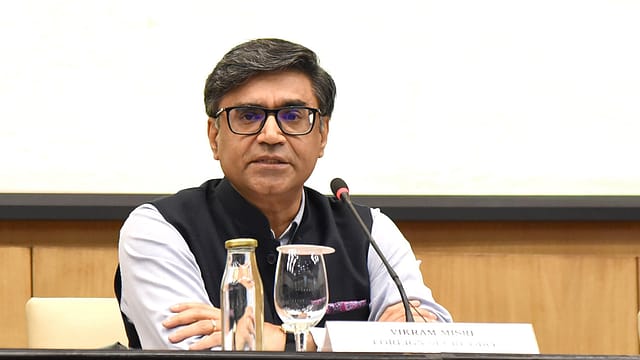
Foreign secretary Vikram Misri will represent India at a UK-led meeting of over 30 countries on Thursday aimed at restoring shipping through the Strait of Hormuz, the Ministry of External Affairs said earlier today, as the US stays away from the initiative.
The meeting, convened by the UK, comes amid escalating tensions in the Gulf following the US-Israeli conflict with Iran that has disrupted traffic through the key oil shipping route.
Ministry of External Affairs spokesperson Randhir Jaiswal said India had been invited to participate in the talks.
“The UK side has invited several countries, which also include India, for talks on the Strait of Hormuz. From our side, the foreign secretary is attending the meeting this evening,” he said.
India pushes for safe passage of ships
Jaiswal said India is in touch with Iran and other countries in the region to ensure the safe movement of its vessels carrying energy supplies.
“We are in touch with Iran and other countries there to see how best we can get unimpeded transit and safe transit for our ships, which are carrying products including LPG, LNG and other products,” he said.
He added that six Indian ships have safely crossed the Strait in recent days.
Global effort to reopen key oil route
The talks bring together nearly three dozen countries as part of a diplomatic push to reopen the Strait of Hormuz, a critical artery for global oil supplies that has seen traffic nearly halt due to Iranian attacks on commercial shipping.
More than 20 attacks on vessels have been reported since the conflict began in late February, with casualties among crew members, according to shipping data.
The UK has said the meeting will explore diplomatic and political measures to restore freedom of navigation and ensure the safety of vessels and seafarers.
US stays away amid Trump remarks
The US is not participating in the meeting, with President Donald Trump indicating that securing the waterway is not Washington’s responsibility.
Trump has also criticised European allies over their role in the conflict and renewed threats to pull the US out of NATO.
The Strait of Hormuz connects the Persian Gulf to global markets and is a vital route for oil and gas shipments. Disruptions have sent energy prices higher and raised concerns over supply chains, particularly for import-dependent regions such as Europe and Asia.