
Trump calls seven countries to deploy warships to secure Strait of Hormuz
ADVERTISEMENT
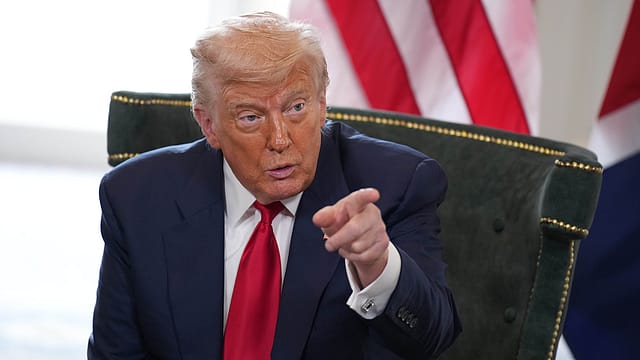
US President Donald Trump has urged seven countries to deploy warships to help secure the Strait of Hormuz, a vital oil transit chokepoint, as tensions with Iran continue to disrupt global energy markets.
Speaking to reporters aboard Air Force One on Sunday, Trump said he had asked around seven nations to participate in efforts to keep the strait open for commercial shipping.
“We're talking to countries about policing the straits, because they are the ones — you know, we don't get oil, very little, 1%. China, as an example, gets about 90% of its oil from the Hormuz Strait. It'd be nice to have other countries policing with us. And we'll help, and we'll work with them,” he said.
The proposed initiative comes amid reports that Washington is preparing to announce a multinational maritime coalition to escort vessels through the narrow waterway, which typically carries about one-fifth of global oil shipments.
Trump did not name the countries he had contacted but indicated they are heavily dependent on crude imports from the Middle East. "I’m demanding that these countries come in and protect their own territory, because it is their own territory," he added.
So far, no country has formally committed to the initiative, even as crude prices continue to rise amid fears of supply disruptions. "I think we're getting a good response... We're always there for Nato. We're helping them with Ukraine... It doesn't affect us, but we've helped them. It'd be interesting to see which country wouldn't help us with a very small endeavour, which is just keeping the Strait open,” Trump noted.
Escalating conflict with Iran
Trump also reiterated Washington’s military pressure on Tehran, claiming the US had significantly weakened Iran’s defence capabilities.
“As far as I'm concerned, we've essentially defeated Iran. I guess they can have a little bit of a fight back. But not much... We have taken out their air forces, air defence... They have no air defence whatsoever. We have taken out their leadership... Militarily, it's been amazing. We have attacked Kharg Island... They wanted to negotiate badly... I don't think they are ready... I think they will be ready in some time. But we do it very well.”
He further said the scale of US operations and the impact on Iran’s military capacity.
“My comparison is small because Iran has very little firepower left. Their missiles are down to a low number. They're shooting very few of them... Because we've decimated their manufacturing capability. Likewise, the drones are way down. They're down to about 20% of what they had... as of yesterday, we're starting to hit the places where they manufacture drones. We think we know where they are. It's a very strong military operation, just as it was in Venezuela. We have the strongest military anywhere in the world by far, not even a contest. And I think people understand that, and we will finish the job."
Iran signals conditional passage
Meanwhile, Iran’s Foreign Minister Abbas Araghchi said Tehran had been approached by several countries seeking safe passage for their ships through the strait.
“A group of vessels from ‘different countries’ had been allowed to pass,” he said, adding that the decision to permit vessels ultimately rests with Iran’s military authorities.
Araghchi also ruled out immediate talks with Washington to end the conflict. “We don’t see any reason why we should talk with Americans,” he said, adding that Israel and the US initiated the conflict through coordinated attacks on February 28 during indirect discussions over Iran’s nuclear programme.