
Lok Sabha passes Finance Bill 2026 with 32 amendments; Budget process moves to Rajya Sabha
ADVERTISEMENT
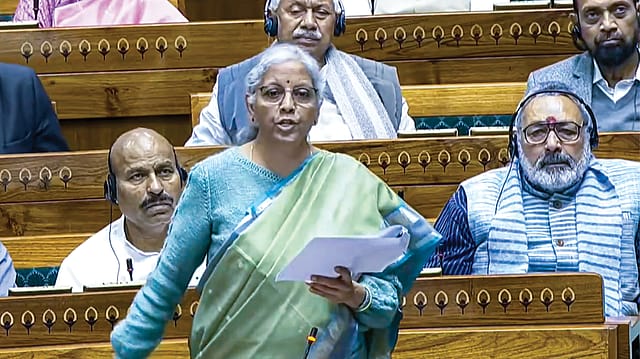
The Lok Sabha on Wednesday passed the Finance Bill, 2026, along with 32 government amendments, completing its part of the Budget approval process for the next financial year.
The Bill will now be taken up by the Rajya Sabha, and upon its approval, the Union Budget process for 2026–27 will be finalised.
Budget size, fiscal road map outlined
The Union Budget for FY27 proposes a total expenditure of ₹53.47 lakh crore, marking a 7.7% increase over the current fiscal ending March 31. Capital expenditure has been pegged at ₹12.2 lakh crore.
The government has projected gross tax revenues at ₹44.04 lakh crore and gross borrowings at ₹17.2 lakh crore.
The fiscal deficit for FY27 is estimated at 4.3% of GDP, marginally lower than 4.4% in the ongoing fiscal, reflecting continued fiscal consolidation.
FM highlights reform momentum, macro stability
Replying to the debate in the Lok Sabha, Finance Minister Nirmala Sitharaman said the government’s reform agenda is driven by “conviction and clarity,” not compulsion, and noted steps taken to support the middle class and MSMEs.
She noted that the fiscal deficit has declined significantly from 9.3% of GDP in FY21 to the projected 4.3% in FY27 while the debt-to-GDP ratio is on a downward trajectory and remains lower than that of several major economies.
Five guiding principles of Finance Bill
Sitharaman said the Finance Bill is anchored on five key principles: trust-based tax administration, ease of living, empowerment of farmers and MSMEs, strengthening India’s position as a global business hub, and seamless trade facilitation through customs reforms.
Relief measures for middle class, MSMEs
Rejecting opposition criticism that the middle class has been overlooked, the minister highlighted measures such as a reduction in Tax Collected at Source (TCS) on remittances under the Liberalised Remittance Scheme (LRS) for education and medical purposes.
TCS on overseas tour packages has also been slashed to 2% from 20%. Additionally, the Budget provides customs duty exemptions on 17 critical drugs and allows duty-free import of medicines for personal use, aimed at easing the financial burden on households.