
Venice Biennale 2026: India Pavilion returns after six years with a focus on memory, migration, and rootedness
ADVERTISEMENT
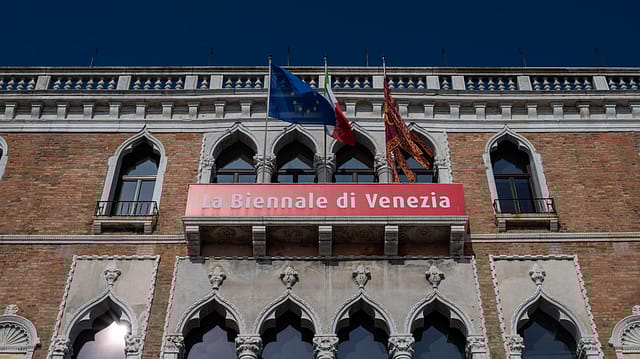
As the global art calendar turns its gaze toward Europe, India is poised to reclaim its place on one of the world’s most influential cultural stages. Fresh from the momentum of the Kochi-Muziris Biennale 2025, a new wave of Indian artists is set to carry that energy forward to the Venice Biennale. Marking a significant return after more than six years, India’s national pavilion at the 2026 edition signals not just participation, but a renewed voice -- one that reflects a nation in transition, grappling with memory, movement, and the evolving meaning of home.
India’s National Pavilion is all set to return to La Biennale di Venezia in 2026, marking its first participation since 2019. Curated by Amin Jaffer, the exhibition -- titled ‘Geographies of Distance: remembering home” will bring together five artists: Alwar Balasubramaniam, Sumakshi Singh, Ranjani Shettar, Asim Waqif, and Skarma Sonam Tashi at the event scheduled to lift its curtains on May 9. Each artist engages with organic materials and draws from traditional Indian techniques, creating a dialogue between craft and contemporary practice.

As per the PIB website, Union Minister of Culture and Tourism Gajendra Singh Shekhawat said, “India’s return to La Biennale di Venezia is a proud moment of reflection and a statement of cultural confidence. Our national pavilion will showcase a contemporary India that is deeply rooted in its civilisational memory while fully engaged with the world today, the Union Minister said. Through this pavilion, India affirms the strength of our cultural diversity, the vitality of our creative communities, and the role of art and culture in contributing to how our nation is seen and understood on the global stage.”
“The Nita Mukesh Ambani Cultural Centre is pleased to partner with the Ministry of Culture to present the National Pavilion of India at the Biennale, featuring some of our most compelling artistic voices,” Isha Ambani, on behalf of the Nita Mukesh Ambani Cultural Centre said as per the PIB website. “The richness and plurality of their work reflect the complexities and creative ambition of contemporary India, while celebrating the timeless traditions of our country. This project underscores our vision for art and culture to foster a global dialogue that transcends boundaries, bringing the best of India and the world together.”
“This year we have the pavilion at the Arsenale, which is one of the two main areas that make up the national representation, a large and important pavilion from the late medieval period which will be the place to display the works of art,” says curator of the exhibition Amin Jaffer. “Our project is really aligned with the overall theme of the biennale, ‘In Minor Keys’ -- in the piano keyboard, minor keys are soft, melancholic and reflective y and the chosen works of the artists reflect this overall theme.”
According to Jaffer, the reasons for naming the theme ‘Geographies of Distance: Remembering Home’ were some key factors related to India and the prevailing conditions. “I came to setting the theme around 'Home' because India is in a stage of economic boom that is sustained, we are in a stage of demographic boom where 15 million new people are added every year, and not because of these two, but also because of changes in technology and the way in which the people live that the ‘home’ of the past is often erased,” he says.
The second dimension to the name, Jaffer says, is the movement of Indians to different parts of the world and even within India. “We have a huge Indian diaspora around the world who moved away from their homes either because of their studies or work or even within the country because of work, study, marriage, etc,” he says. “So, the second remembering home is because of that physical distance where, after spending a few years people tend to wonder where their home is. So, these ways of remembering home is addressed by the pavilion through these five artists and their works.”
The five artists and their interpretations of the theme 'Geographies of Distance: Remembering Home' will be on display from May till November, duration of the Venice Biennale. “The first artist, Tamil Nadu-based Bala, he’s already a museum quality artist, will be making a work in terracotta. He’s very attached to the fragility of the earth and our rapport with the earth. He will be making a fantastic two-panel work which is about the fracture in the earth,” Jaffer says. “The second artist, Sumakshi, she recreated the house she used to live in at Link Road in Delhi in threads.”
“The third artist Ranjani, a celebrated artist who lives in rural Karnataka, will be bringing in the elements of a garden – flower, foliage, nature. The fourth, Skarma Sonam Tashi from Ladakh observes how the traditional way of living in Ladakh is replaced with modern building methods. His work is at a more macro level but with the point of view of displacement,” he adds. “And finally, Asim Waqif, another well-known artist who is known for his bamboo works, is going to make a bamboo scaffolding which is going to tower over the other projects. His work is the one what provides the dramatic tension because when we a scaffolding, we always wonder what’s behind it, what’s going to come or what’s the next thing!”
Organised by Ministry of Culture in collaboration with the Nita Mukesh Ambani Cultural Centre and the Serendipity Arts Foundation, in the end, India’s return to the Venice Biennale is more than a cultural comeback -- it is a quiet assertion of identity in a rapidly shifting world. Through deeply personal yet universally resonant works, the pavilion invites viewers to reconsider what “home” means in an age of constant movement and change. Rooted in memory, material, and migration, these artistic voices come together to form not a singular narrative, but a layered reflection of belonging -- one that surely is going to linger long after the exhibition ends on November 22.