
Geopolitics’ price tag: Dalal Street loses ₹19 lakh crore as oil shock sends Sensex tumbling - what history says
ADVERTISEMENT
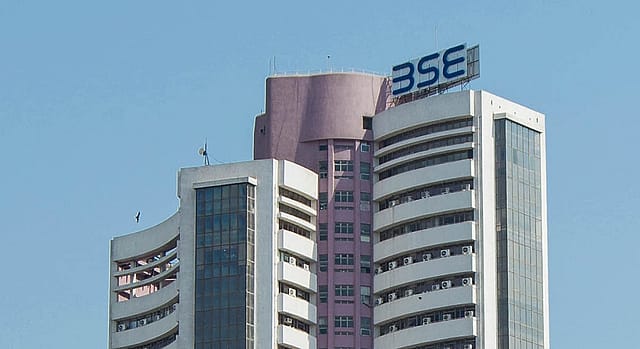
A sudden escalation in West Asia has delivered a sharp jolt to Indian equities, wiping out nearly ₹19 lakh crore in investor wealth in just five trading sessions and sending benchmark indices into their steepest weekly decline in months.
The BSE Sensex has fallen more than 3,300 points during the period, while the Nifty 50 has shed over 1,000 points as amid fears that the widening conflict could disrupt global energy supplies.
The sell-off followed escalating hostilities involving Iran, Israel, and the United States, which pushed oil prices higher and reignited concerns about supply disruptions through the Strait of Hormuz, the world’s most critical oil shipping corridor.

Why are global oil routes at the centre of market fears?
The Strait of Hormuz handles roughly one-fifth of the world’s oil shipments, making it one of the most strategically sensitive maritime chokepoints.
Any disruption in the region can quickly send crude prices soaring.
For India, the risk is amplified because the country imports nearly 90% of its crude oil requirements. Higher oil prices tend to widen the current account deficit (CAD), weaken the rupee and raise inflation — a combination that usually triggers selling in equities.
In fact, a Crisil report that came out last week projects the CAD to widen to 1.2% of GDP in fiscal 2027 as against a projected 0.8% of GDP in fiscal 2026.
What does history say about markets during wars?
Historical data suggests that while geopolitical conflicts often trigger sharp market declines, the corrections are usually temporary.
During the Gulf War, the Sensex fell about 16% from its peak as oil prices surged following Iraq’s invasion of Kuwait. Once the conflict stabilised, markets rebounded strongly, gaining more than 50% within six months from the bottom.
A similar pattern unfolded during the Kargil War in 1999, when equities dropped around 11% during the conflict but recovered later in the year.
Global shocks have shown comparable behaviour. After the September 11 attacks in 2001, the Sensex declined nearly 18% before recovering over the following months.
When the Iraq War began, markets experienced volatility but the correction remained relatively contained at about 4%.
More recently, the Russian invasion of Ukraine triggered an 11% fall in Indian equities before markets gradually stabilised.
Which sectors are most vulnerable during geopolitical shocks?
The latest sell-off has again produced clear sectoral divergences.
Defence companies have rallied on expectations of higher military spending globally. Nifty IT stayed relatively stable even as major companies such as HCL Tech and Wipro fell over 1% during the past five trading sessions.
On the other hand, aviation, chemicals, logistics and paint companies — all sectors heavily exposed to crude-linked inputs — have faced selling pressure.
Banks and real estate companies have also declined as investors worry that higher oil prices could fuel inflation and delay interest rate cuts
How has the government responded to the energy shock?
New Delhi has already begun taking steps to ensure energy security.
The government invoked emergency powers directing domestic refineries to maximise production of liquefied petroleum gas (LPG) and prioritise supplies for household consumption.
Under the directive, refiners have been asked to divert propane and butane streams toward LPG output and sell the fuel primarily to state-run oil marketing companies.
The move is aimed at ensuring uninterrupted cooking gas supply for India’s more than 33 crore LPG consumers, even if shipping routes from the Middle East face disruption.
However, the mandate could have consequences for industry. Redirecting feedstock toward LPG production may reduce petrochemical output and squeeze margins for refiners.
Are consumers already feeling the impact of the crisis?
Yes. Rising global energy prices have already begun feeding into domestic costs.
Domestic LPG prices were raised by about ₹60 per cylinder, while commercial cylinders used by restaurants and hotels saw an increase of roughly ₹115.
The price revision reflects higher import costs as tensions in West Asia push up global energy prices.
Officials have also said that India’s petroleum reserves could help cushion short-term supply disruptions if the conflict escalates further.
The geopolitical shock has also triggered policy responses beyond India. The United States granted India a 30-day waiver allowing continued purchases of Russian crude oil.
If crude stabilises after the initial spike, historical precedent suggests equities could recover much of the lost ground once geopolitical uncertainty fades.
But if tensions escalate and shipping disruptions intensify around the Strait of Hormuz, the economic fallout could become more severe, potentially pushing inflation higher and keeping financial markets volatile.
(DISCLAIMER: The views and opinions expressed by investment experts on fortuneindia.com are either their own or of their organisations, but not necessarily that of fortuneindia.com and its editorial team. Readers are advised to consult certified experts before taking investment decisions.)