
₹11.3 lakh crore electronics output drives 20% value addition in India, smartphones lead with ₹5.5 lakh crore production: MeitY
ADVERTISEMENT
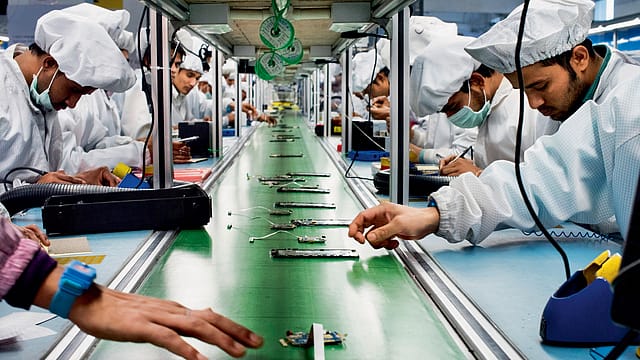
India’s electronics manufacturing sector, now valued at around ₹11.3 lakh crore, has seen domestic value addition rise to nearly 18–20%, with smartphones—accounting for roughly ₹5.5 lakh crore of output—emerging as the primary growth engine, according to the Ministry of Electronics and Information Technology (MeitY).
The data points to a gradual but clear transition from basic assembly operations to a more integrated manufacturing ecosystem, where a larger share of components and sub-assemblies is being produced locally—particularly in the mobile phone segment.
Smartphones anchor value addition gains
The expansion of mobile phone manufacturing has been central to this shift. Output has jumped sharply over the past decade, turning India into one of the world’s largest production hubs for smartphones.
Alongside production, exports have gathered pace, with outbound shipments of smartphones crossing the $30 billion mark in 2025, making it one of India’s leading export categories. This surge has helped improve economies of scale and encouraged localisation of parts such as chargers, batteries, camera modules and mechanical components.
India has also moved from being a net importer of mobile phones to a net exporter, reflecting the growing competitiveness of its manufacturing base.
Policy push fuels ecosystem depth
The rise in domestic value addition has been underpinned by targeted policy interventions, including the Production Linked Incentive (PLI) scheme, the Phased Manufacturing Programme (PMP), and component-focused schemes aimed at strengthening the supply chain.
These initiatives have incentivised global and domestic manufacturers to expand operations in India, while also nudging suppliers to set up local facilities—thereby deepening the ecosystem beyond final assembly.
As a result, the broader electronics sector has scaled rapidly, with production growing multiple times over the past decade and exports witnessing even faster expansion.
Next phase: deeper localisation
Even as value addition inches towards 20%, a significant portion of high-value components—such as semiconductors, display panels and advanced modules—continues to be imported, indicating room for further localisation.
The government’s ongoing push to build a semiconductor and components ecosystem is expected to address this gap over the medium term.