
Ali Khamenei killed in US-Israel strike, confirms Iran; son Mojtaba emerges as possible successor
ADVERTISEMENT
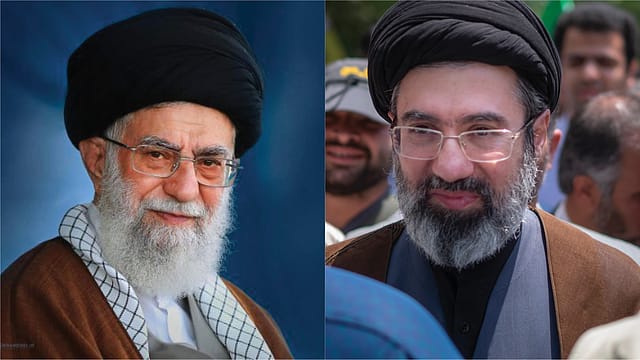
Iran has officially confirmed that Supreme Leader Ayatollah Ali Khamenei has been killed in a joint U.S.–Israeli military operation, ending his 37-year rule and plunging the Islamic Republic into its most uncertain political transition in decades.
Iranian state television broadcast the announcement early Sunday declaring a 40-day national mourning period. The 86-year-old cleric was described as a “martyr” killed in what officials termed a “direct act of aggression.”
The confirmation followed hours of mounting speculation after U.S. President Donald Trump publicly announced what he called the “elimination” of Iran’s Supreme Leader, describing the mission as a “precise and necessary operation.” Israeli prime minister Benjamin Netanyahu had earlier cited “strong indications” that Khamenei had been struck.
Strike at the core of the regime
The operation — codenamed "Operation Epic Fury" involved extensive aerial bombardment targeting command centres in Tehran, including the Supreme Leader’s compound in the Pasteur district.
Khamenei, who succeeded Ruhollah Khomeini in 1989, was the ultimate authority in Iran’s political and religious system. His death marks the most consequential strike against the Islamic Republic’s leadership since its founding in 1979.
Analysts say the killing represents an unprecedented decapitation of the Iranian state’s command structure at a time when tensions with Israel and the U.S. were already at a boiling point.
Heavy losses reported
Iranian media outlets reported that several senior officials were also killed in the strikes, including General Mohammad Pakpour, commander of the Islamic Revolutionary Guard Corps (IRGC) Ground Forces, and Ali Shamkhani, a senior adviser to the Supreme Leader.
There were also reports of casualties within Khamenei’s extended family, though independent verification remains limited amid communication disruptions in Tehran.
With Khamenei’s death confirmed, attention now turns to Iran’s Assembly of Experts, the clerical body constitutionally responsible for appointing the next Supreme Leader.
One name immediately resurfacing is Mojtaba Khamenei, the late leader’s second-eldest son. Long viewed as an influential behind-the-scenes figure with deep ties to the security establishment, Mojtaba is seen by some as a continuity candidate.
However, his potential elevation is fraught with complications. Iran’s clerical establishment has historically resisted dynastic succession, and Mojtaba reportedly lacks the highest-level theological credentials traditionally expected of a Supreme Leader. His appointment could deepen internal fractures within the ruling elite and potentially trigger public backlash.
Other names circulating include senior cleric Alireza Arafi and Hassan Khomeini, grandson of the Islamic Republic’s founder, though factional divides could make consensus difficult.
Geopolitical fallout was swift
Regional air defence systems were activated across parts of the Gulf, and reports of missile exchanges emerged overnight as fears of escalation intensified. With key IRGC commanders reportedly killed and the country entering formal mourning, Iran now faces a volatile power transition under the shadow of active conflict.