
Budget 2026: Duty exemptions for battery manufacturing, EV supply chains take centre stage
ADVERTISEMENT
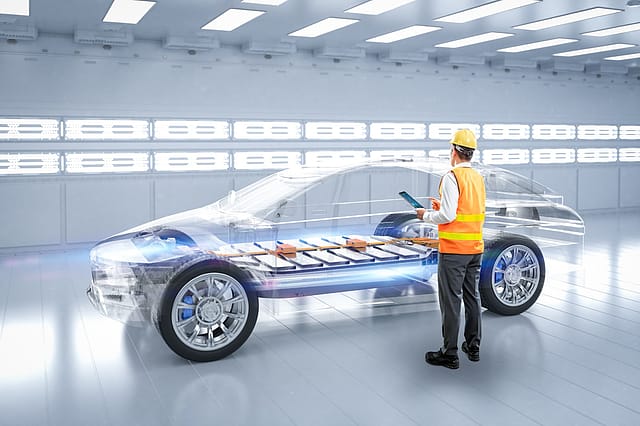
Finance Minister Nirmala Sitharaman on Sunday placed batteries and electric mobility at the core of the Union Budget 2026-27, announcing a set of customs duty exemptions and manufacturing support measures aimed at strengthening India’s electric vehicle (EV) supply chain and reducing costs across the clean mobility ecosystem.
Presenting the annual Budget in Parliament, Sitharaman stated that the government would continue and expand “duty relief” for battery manufacturing, signalling policy continuity for automakers and component suppliers scaling up investments in battery-driven vehicles.
Customs duty relief for lithium-ion cells
A key proposal was the extension of the basic customs duty (BCD) exemption on capital goods used for manufacturing lithium-ion cells, with the scope widened to include equipment deployed for Battery Energy Storage Systems (BESS).
“I propose to extend the basic customs duty exemption currently available on capital goods used for manufacturing lithium-ion cells for batteries to those used for manufacturing lithium-ion cells for battery energy storage systems,” Sitharaman said in her budget speech.
The Union Budget has also continued “tariff exemptions” on lithium-ion components, reinforcing government support for domestic cell manufacturing at a time when EV adoption is accelerating across passenger vehicles, two-wheelers, and commercial segments.
Notably, industry stakeholders have repeatedly underscored the importance of stable customs duty structures, given the capital-intensive nature of battery manufacturing and the push to localise EV supply chains.
Clean mobility and EV ecosystem support
In a further boost to clean mobility-linked manufacturing, Sitharaman announced a basic customs duty exemption on the import of sodium antimonate, a key raw material used in the manufacture of solar glass. The move is expected to support domestic solar manufacturing and indirectly benefit EV and renewable energy supply chains.
“I also propose to provide basic customs duty exemption on the import of sodium antimonate used in the manufacture of solar glass,” the Finance Minister added.
The Budget also proposed targeted relief for alternative fuels. Sitharaman announced the exclusion of the entire value of biogas while calculating the central excise duty payable on biogas-blended compressed natural gas (CNG), a measure aimed at encouraging cleaner fuel adoption in transport.
Together, these announcements reflect a broader fiscal push to align clean mobility goals with domestic manufacturing priorities under India’s energy transition strategy.
Energy storage, critical minerals get policy push
Beyond electric vehicles, the Budget extended basic customs duty exemptions to capital goods required for the processing of critical minerals in India, highlighting the government’s intent to reduce import dependence in strategically important materials.
In a major structural announcement, Sitharaman proposed the creation of dedicated rare earth corridors across Odisha, Kerala, Andhra Pradesh, and Tamil Nadu to strengthen India’s rare earth ecosystem.
“A scheme for rare earth permanent magnets (REPM) was launched in November 2025. We now propose to support the mineral-rich states of Odisha, Kerala, Andhra Pradesh, and Tamil Nadu to establish dedicated rare earth corridors to promote mining, processing, research and manufacturing,” she said.
The proposal builds on a Cabinet-approved scheme with a financial outlay of ₹7,280 crore to promote domestic manufacturing of sintered rare earth permanent magnets—critical inputs for EV motors, renewable energy systems, electronics, aerospace, and defence applications.
The scheme targets the creation of 6,000 metric tonnes per annum of integrated manufacturing capacity, backed by sales-linked incentives of ₹6,450 crore and capital subsidies of ₹750 crore, with capacity allocated through a global competitive bidding process.