
From pet ownership to pet parenting: Supertails bets big on India opportunity
ADVERTISEMENT
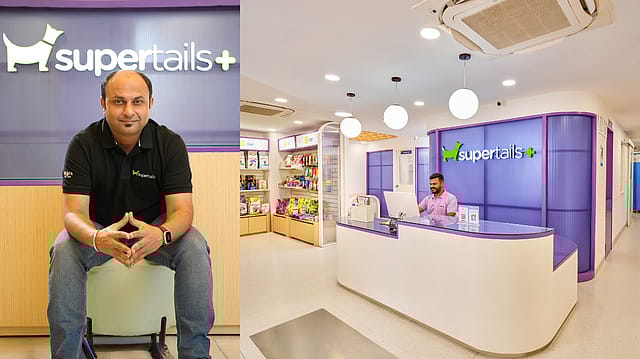
India’s pet care market is at an inflection point, driven as much by emotional shifts as by economic ones. For Supertails, which recently raised $30 million in a round led by Venturi Partners, this moment is less about capital and more about timing the category’s evolution.
In an interview with Fortune India, Vineet Khanna, co-founder of Supertails, says the sector has moved beyond early-stage ambiguity. “A few years ago, there was hope around pet care as a category. Today, that hope has translated into belief and conviction. The question is no longer whether this market will grow, but how it will scale and who will lead it,” he says.
What is driving the rise of the ‘pet parent’?
At the core of this transformation is a shift in consumer mindset. Khanna points to macro trends such as rising disposable incomes, delayed marriages, and smaller families. “When you combine these factors, people have both the capacity and the need for companionship. Pets naturally fill that role,” he explains.
This shift accelerated during the pandemic, but has sustained well beyond it. More importantly, it has redefined how consumers engage with the category. “We are seeing a clear transition from pet ownership to pet parenting. People are more involved, more informed, and willing to spend more across every aspect of their pet’s life,” Khanna says.
He breaks this down into three drivers—growth in pet population, higher emotional involvement, and increased awareness. Together, these are pushing consumers toward premium products, preventive healthcare, and specialised services.
How are spending patterns and premiumisation evolving?
This behavioural evolution is visible in spending patterns. Essentials such as food are increasingly accompanied by discretionary spends on grooming, accessories, and lifestyle products. At the same time, preventive healthcare—vaccinations, diagnostics, supplements—is gaining traction.
“A decade ago, spending on pets was largely reactive. Today, it is proactive. Pet parents want to ensure longer, healthier lives for their pets, and that is driving consistent, repeat spending,” Khanna notes.
India’s organised pet care market is currently estimated at $2.5–3 billion, up sharply from pre-pandemic levels. However, Khanna believes the real opportunity is far larger. “If you include unorganised consumption, the market is already $25–30 billion. The shift we are seeing is that this consumption is gradually becoming organised,” he says.
How is Supertails building for continuity of care?
Supertails’ strategy is to build an integrated, full-stack ecosystem that caters to this evolving demand. The platform combines digital commerce, veterinary services, and physical clinics into a single offering.
“The biggest problem for pet parents today is fragmentation. They have to go to multiple places for different needs. Our approach is to build continuity of care—so that everything is available in one ecosystem,” Khanna explains.
The company has launched clinics and grooming centres in Bengaluru, offers at-home veterinary services, and provides quick delivery of pet essentials. It plans to expand this model across top cities.
A key enabler of this integration is data. “We are building data around the pet, not just the customer. That allows us to personalise recommendations, anticipate needs, and create a more seamless experience,” he says, adding that AI is helping accelerate this capability.
Why are trust, infrastructure, and scale critical in this category?
In a category as sensitive as pet care, trust remains central. Khanna admits that building trust takes time. “You cannot expect a pet parent to switch overnight. Trust is built step by step—through consistent, high-quality experiences across smaller interactions,” he says.
Physical clinics, therefore, play a critical role. Beyond enabling services like diagnostics and surgeries, they act as trust anchors for the brand. “Healthcare is where trust is won or lost. If we get that right, everything else follows,” he adds.
From a business standpoint, clinics also improve retention, margins, and lifetime value—key metrics for a category driven by repeat engagement.
What lies ahead for Supertails and the pet care market?
The latest funding will be used to expand Supertails’ clinic network, strengthen its veterinary ecosystem, and invest in fulfilment and technology. The company has already seen its customer base grow over five times in the last two years.
Looking ahead, Khanna expects the market to continue expanding rapidly, potentially crossing $5 billion by 2030. “This is still an underpenetrated category with strong structural tailwinds,” he says.
For Supertails, the ambition is to become the default platform for pet care in India. “If we can make pet parenting simpler, more reliable, and accessible across every stage of a pet’s life, we believe we can build a very large, enduring business,” Khanna says.