
COAI DigiCom summit: Policymakers, telcos call for secure, AI-driven networks to combat spam, digital fraud
ADVERTISEMENT
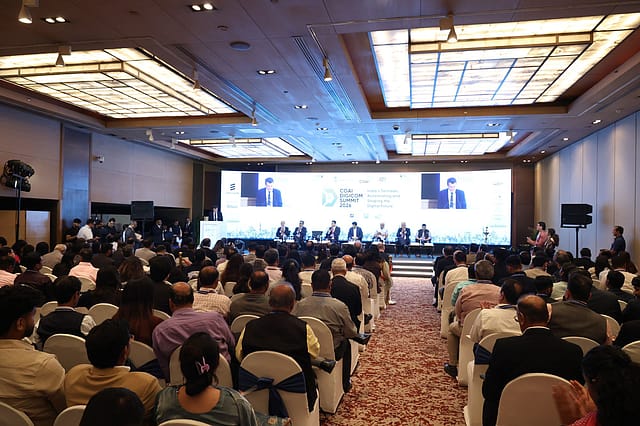
As India’s digital economy expands rapidly, risks such as spam calls and increasingly sophisticated online fraud are also rising, making the need for a secure digital ecosystem more urgent. At the Cellular Operators Association of India (COAI) DigiCom Summit 2026, policymakers, regulators, and industry leaders called for building a secure and trusted digital ecosystem powered by next-generation telecom networks to tackle spam and digital fraud.
The summit, the second in the DigiCom Series by COAI, brought together government officials, regulators, and industry leaders to discuss how India can build a secure, resilient, and future-ready digital infrastructure. A key focus area this year was the growing threat of spam and online fraud, alongside the role of artificial intelligence (AI) and 5G in strengthening telecom networks, COAI said in a release.
During a panel discussion on tackling spam and digital fraud, participants stressed that addressing these challenges requires an ecosystem-wide approach, combining AI-led detection systems, early identification of fraud patterns, and closer coordination between government agencies, telecom operators, and digital platforms. They also called for regulatory parity across communication channels and stronger cross-border cooperation, while underlining the importance of consumer awareness.
In his keynote address, Manish Sinha, Member (Finance), Department of Telecommunications, said that as India advances rapidly in its technological evolution, with one of the fastest 5G rollouts globally and widespread adoption of affordable digital services, artificial intelligence is emerging as a key transformative force. “This progress also brings greater responsibility for network providers to remain accountable to society,” he said.
Highlighting concerns around fraud and spam, he stressed the need to prioritise trust, security, and human impact, urging stakeholders to act as gatekeepers through robust regulations and efficient operations.
Speaking at the event, N.K. Bhola, Wireless Advisor, said that India is moving steadily towards a digitally empowered future, with telecom serving as the backbone of innovation and inclusion. With strong progress in 4G and 5G, the country is now preparing for a 6G-ready ecosystem. He also pointed to the growing role of AI in telecom, from predictive maintenance to dynamic spectrum management, while cautioning that increased automation must be matched with strong security safeguards.
Industry leaders echoed the importance of embedding intelligence into networks. In a panel discussion on building intelligent and scalable networks, participants from companies such as Bharti Airtel, Reliance Jio, and Vodafone Idea highlighted that future telecom infrastructure will be increasingly AI-driven. Panelists stressed the need for resilient, energy-efficient networks capable of supporting emerging applications across IoT, automation, and real-time services.
On a panel titled ‘Tackling Spam and Digital Frauds through Shared Ecosystem Policy and Regulatory Aspects’, participants said that tackling spam and digital fraud requires a proactive, ecosystem-wide approach, combining AI-led detection, early identification of fraud patterns, and stronger coordination across government, industry, and digital platforms.
Panelists also highlighted the need for regulatory parity across communication channels, enhanced cross-border collaboration, and sustained consumer awareness. They noted that building a secure digital ecosystem will depend on the combined efforts of technology, policy, and informed citizens.